







Historical Scenic Views from Red Hill
Red Hill Views of Lake Winnipesaukee
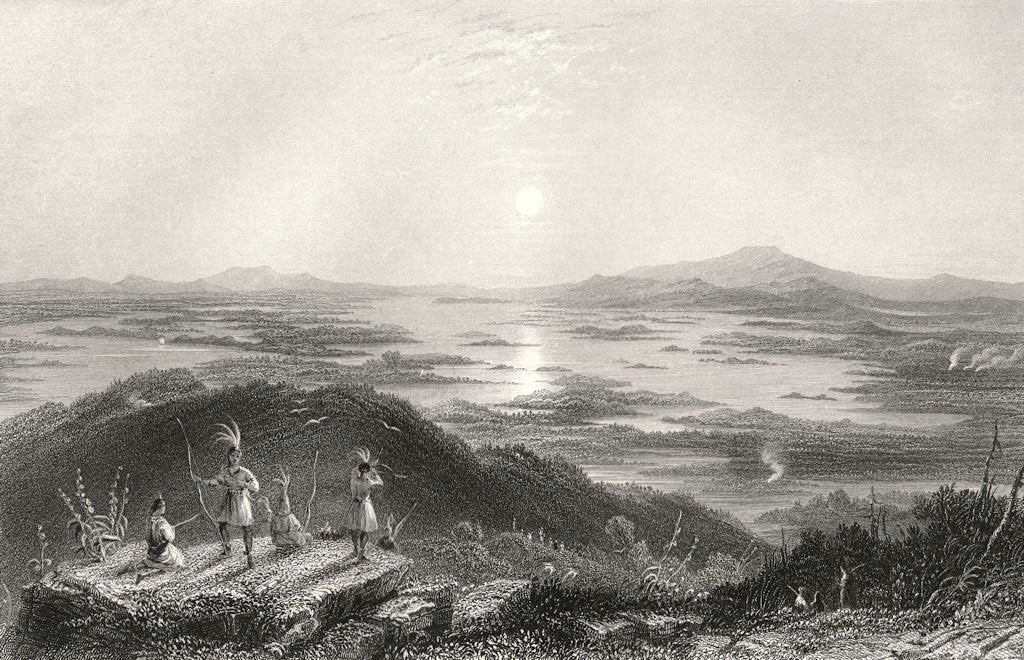
The earliest illustration of the view of Lake Winnipesaukee from Red Hill. A steel engraving from American Scenery; or, Land, Lake, and River/Illustrations of Transatlantic Nature by N. P. Willis, published in London by George Virtue in 1840. The artist was W. H. Bartlett (1809-1854), the English landscape painter who traveled widely in his short life, producing images of landmarks, city views and natural wonders for a number of travel books published in London. American Scenery was the most popular of these, and remains a charming and historic picture of many parts of our country in the 1830’s. R. Wallis engraved this view in 1837 from the Bartlett art work.
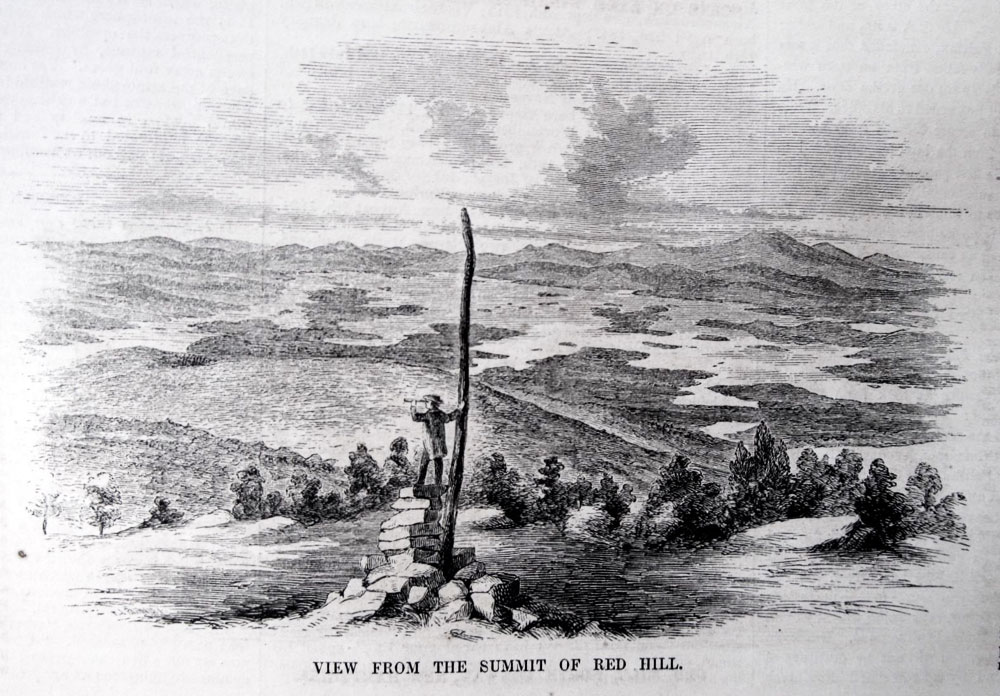
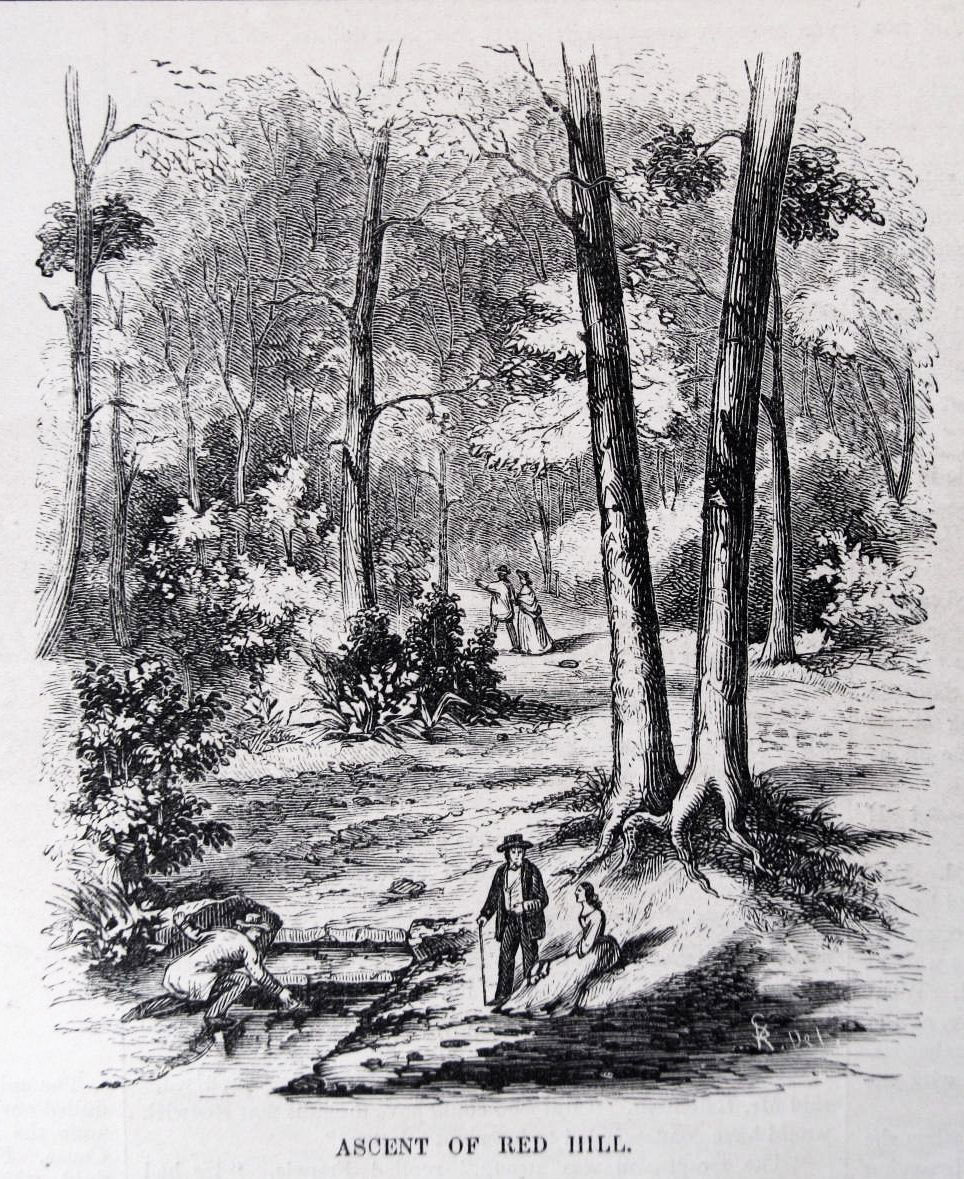
The following three illustrations appeared in the May 19, 1855 issue of Ballou’s Pictorial magazine.
View of Lake Winnipesaukee from the summit
Ascent of Red Hill
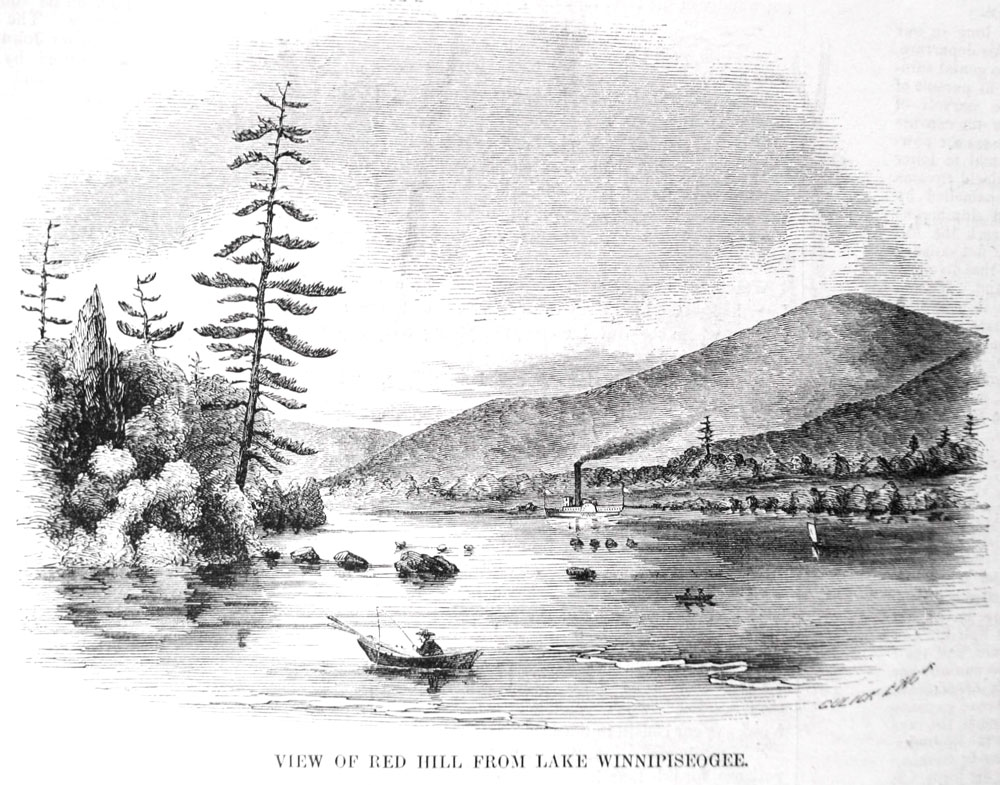
View of Red Hill from the lake
“From Centre Harbor, at the upper end of the Lake, the drives are very attractive. The guide-books report them in detail. We have room to call attention only to the excursion which is most interesting, that is, to the summit of “Red Hill,” which rises about five miles away, and stands about two thousand feet above the sea. Near the top of the mountain, where its ledges of sienite are exposed to the action of the air, they have a reddish hue. But it owes its name, we believe, to the fact that it is covered with the uva ursa, the leaves of which change to a brilliant red in autumn. The excursion is easily made in the afternoon, or between breakfast and dinner. Its unwooded peak is lifted to the height from which scenery looks most charming. And there is no point except this, along the regular mountain route, beneath which a large lake is spread. But here Winnipiseogee stretches from its very foot, and its whole length is seen as far as the softly swelling hills that bound it on the southeast. Here is the place to study its borders, to admire tbe fleet of islands that ride at anchor on its bosom — from little shallops to grand three-deckers — and to enjoy the exquisite lines by which its bays are enfolded, in which its coves retreat, and with which its low capes cut the azure water, and hang over it an emerald fringe. And if one can stay there late in the afternoon, as we have stayed, and see the shadows thrown out from the island and trees, and the hues that flush the Lake’s surface as the sun declines, he obtains the most fascinating and enjoyable view which can be gained from any eminence that lies near the tourist’s path. -Thomas Starr King, 1859
A later engraving of Red Hill from the Lake shows more development of Center Harbor than the 1855 engraving.

Stereoview #138 from the White Mountain Scenery series, published in the 1870s by John P. Soule, 130 Tremont St, Boston.
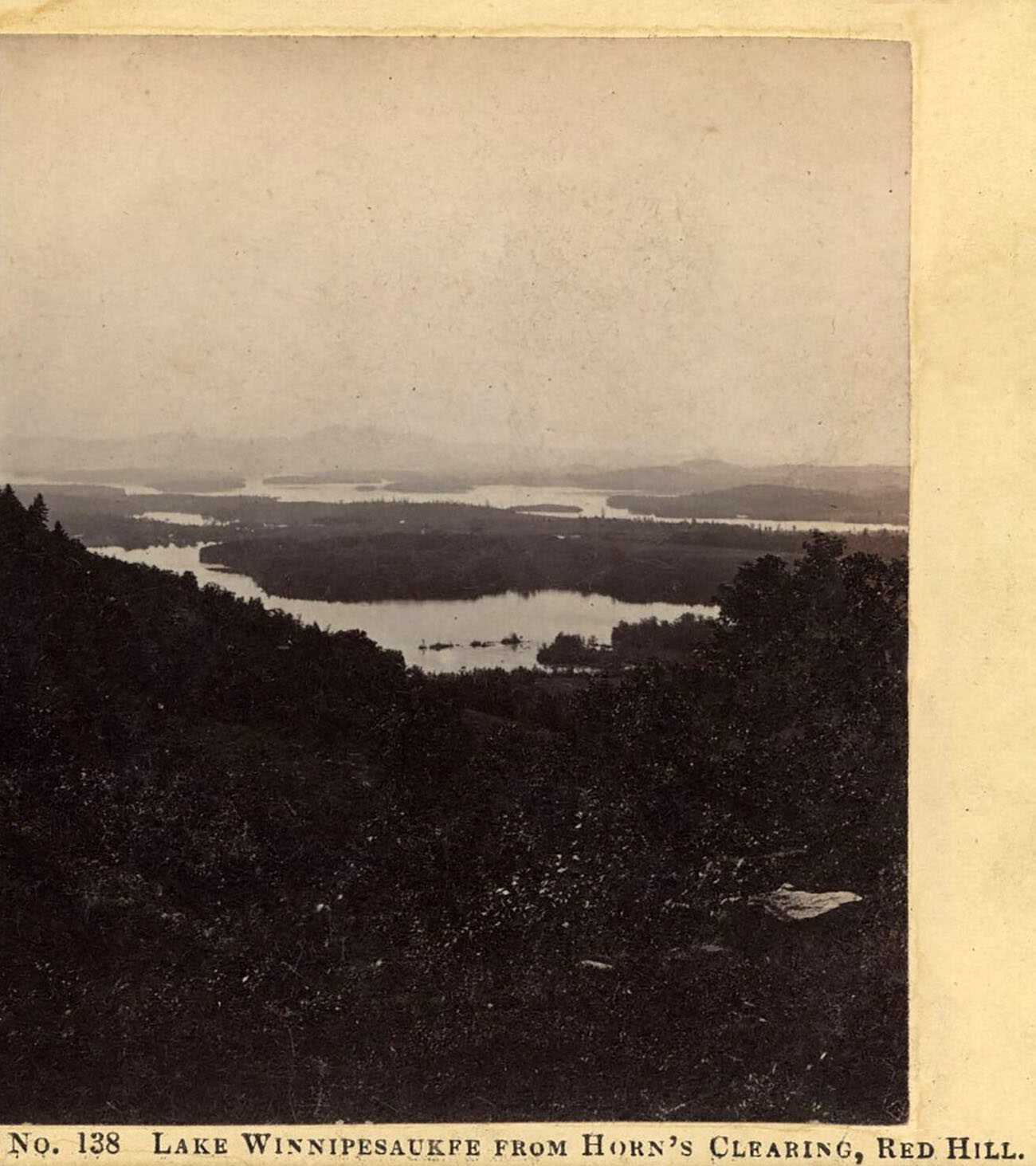
Stereoview #139 from the White Mountain Scenery series.
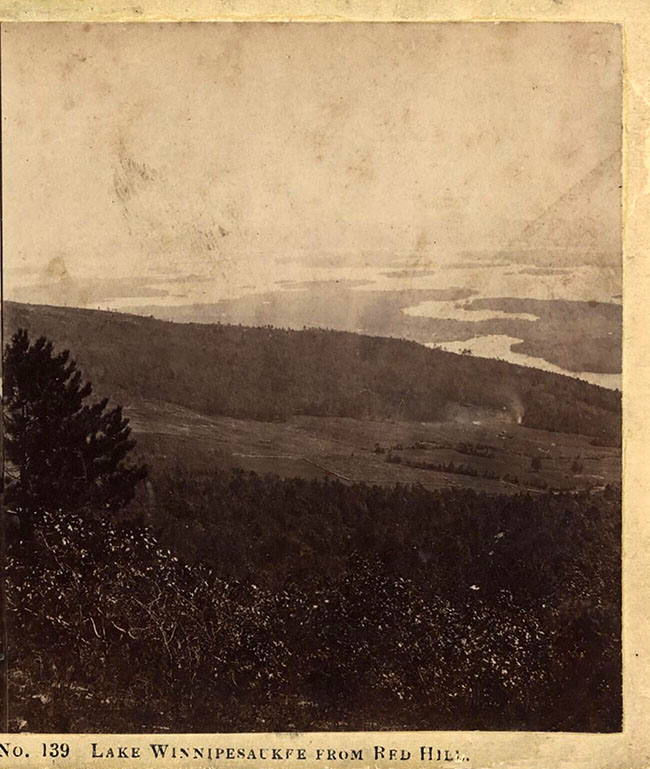
An illustration of the view from Red Hill. Harper’s magazine, June, 1881 issue.
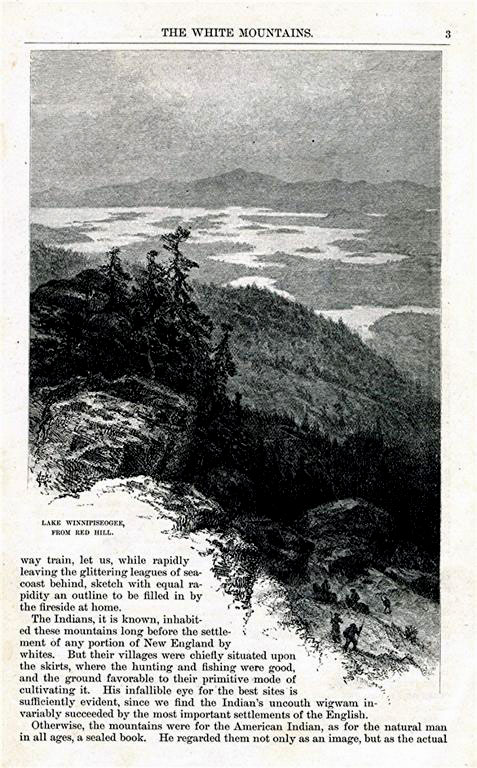
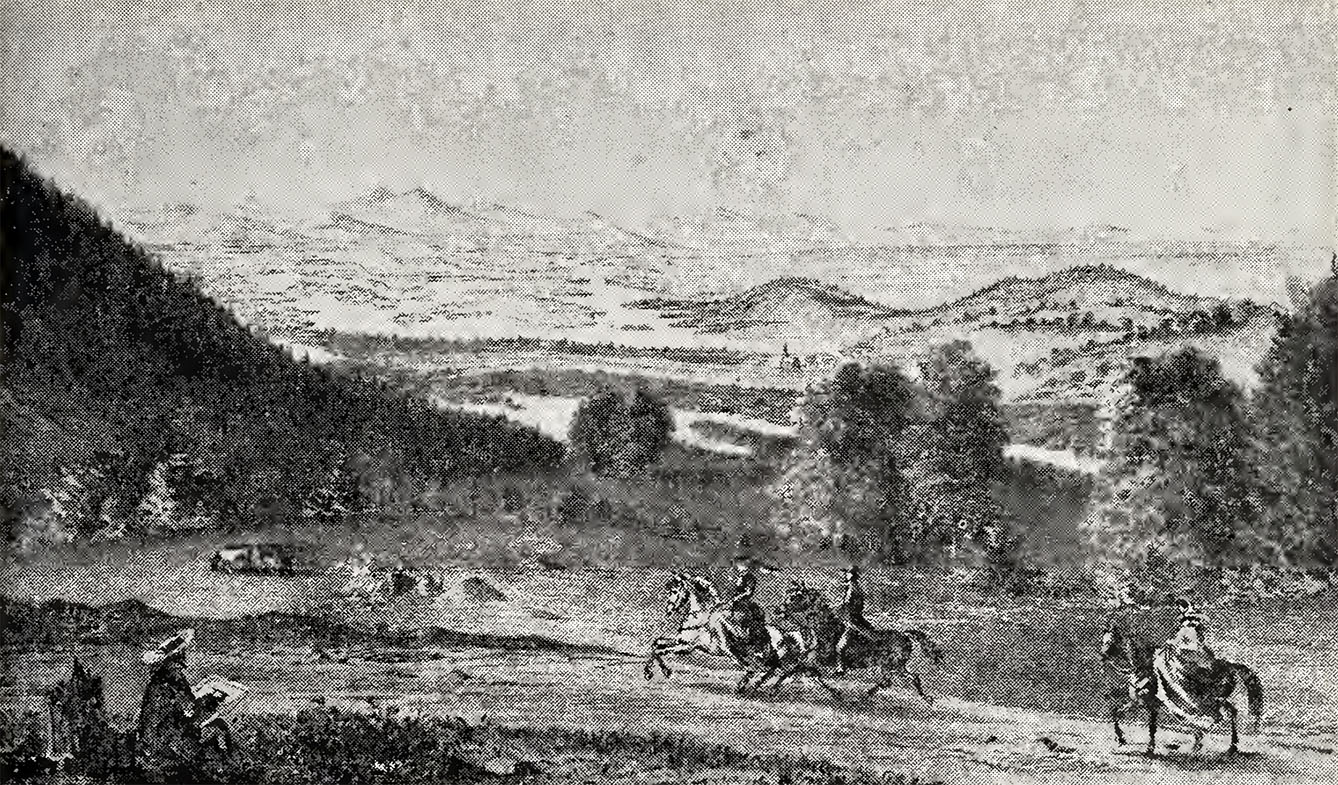
1858 engraving of a party ascending Red Hill up the carriage road. Note the artist in the lower left sketching a view of the lake.
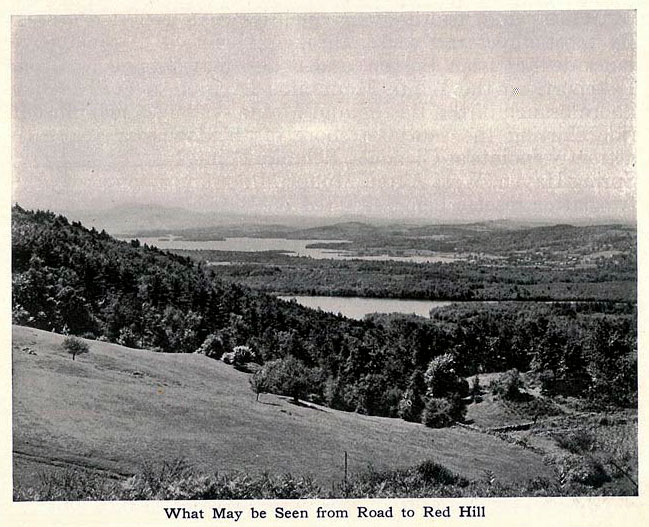
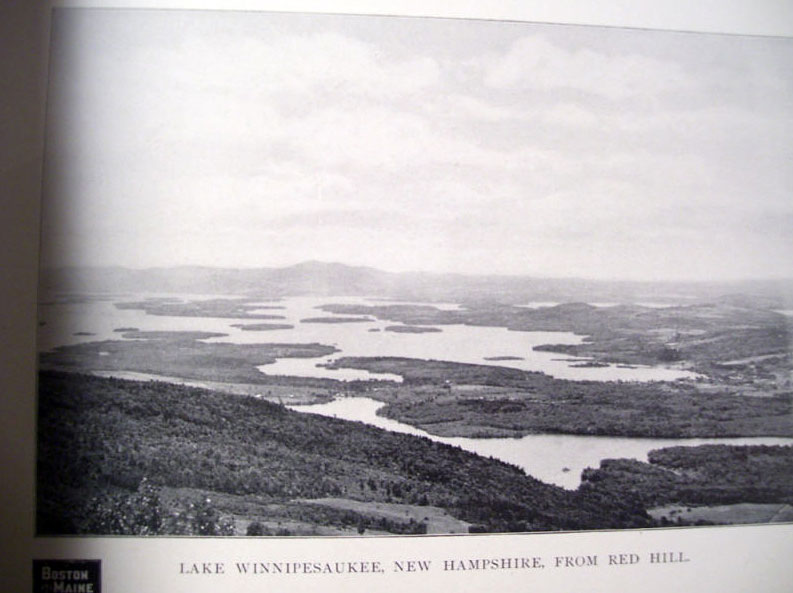
Two similar photos by the B&M railroad. The first is from a 1916 Lake Winnnipesaukee booklet. The second, from a booklet entitled “New England Lakes”, began with the following introduction: “New England’s lakes are the rarest gems with which a bountiful Nature has endowed her. They have an exquisite beauty which has stirred the muse of poets, a romantic environment which has tinctured the writings of historians, and an almost supernatural charm which, ages ago, caused the aboriginal dwellers in the land to mutely worship them. There is no portion of its broad and beautiful summer domain to which the Boston & Maine Railroad Company would more willingly direct the attention of those who are bent on the enjoyment of an inland summer vacation. It cheerfully does this, not only becasue the natural beauty and healthfulness of these charming lake resorts abundantly warrants it, but because most of them are now prepared to entertain summer visitors in a manner fully befitting the requirements of the modern vacation seeker. Of these “gems of first water,” the first that naturally comes to mind is Winnipesaukee, the largest and in many respects the grandest…”
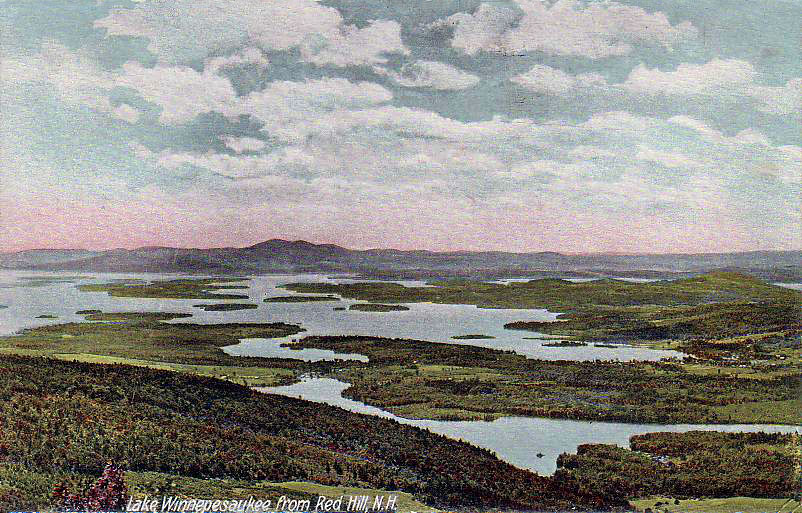
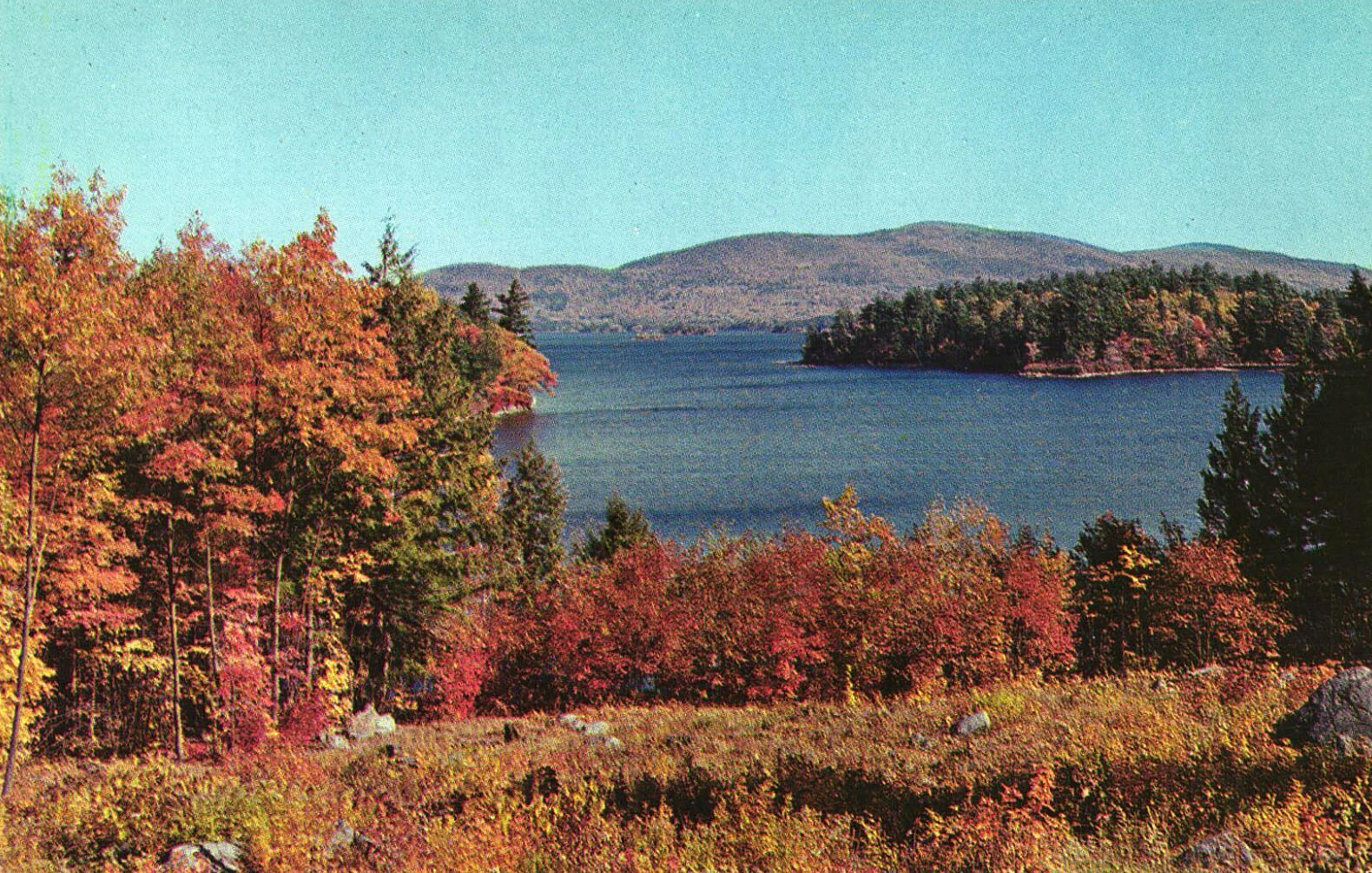
Historical color postcards of the view from Red Hill
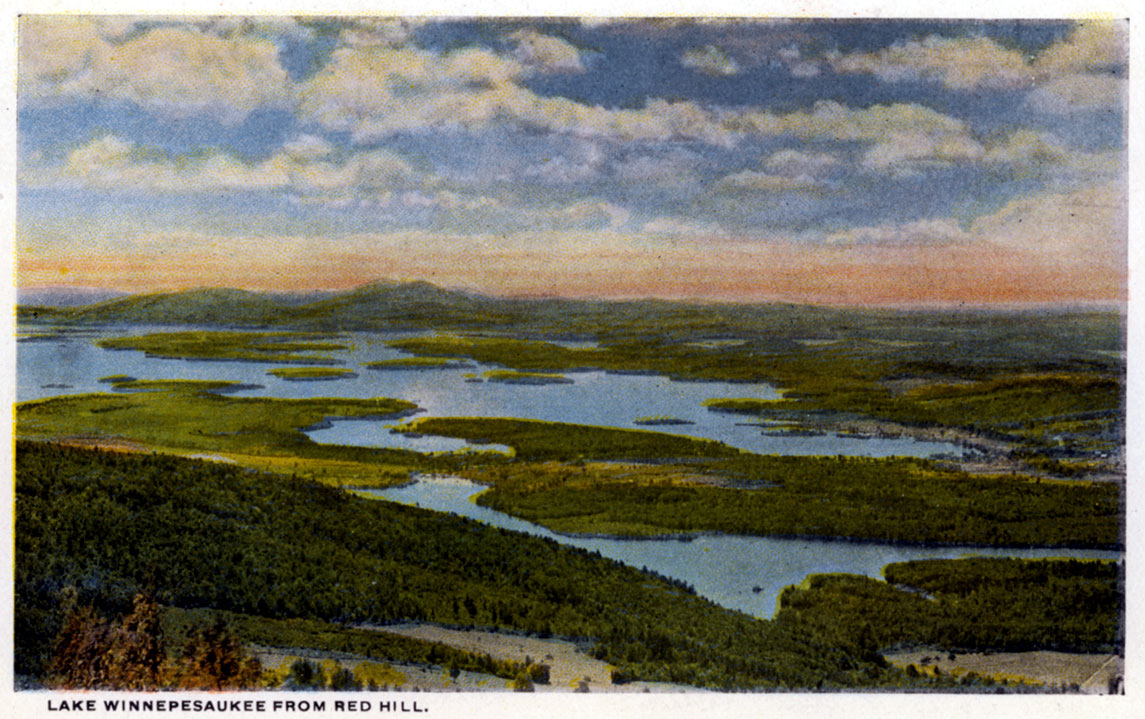
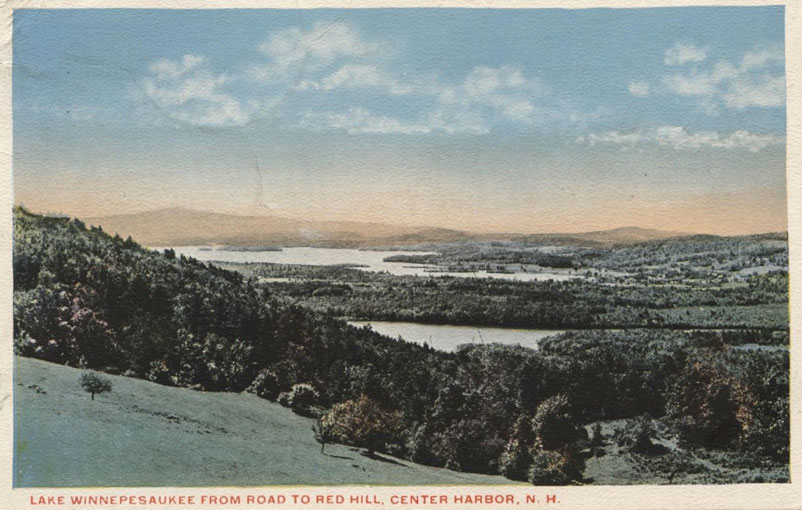
Oil painting by Bradford Freeman, “Lake Winnipesaukee from Red Hill”.
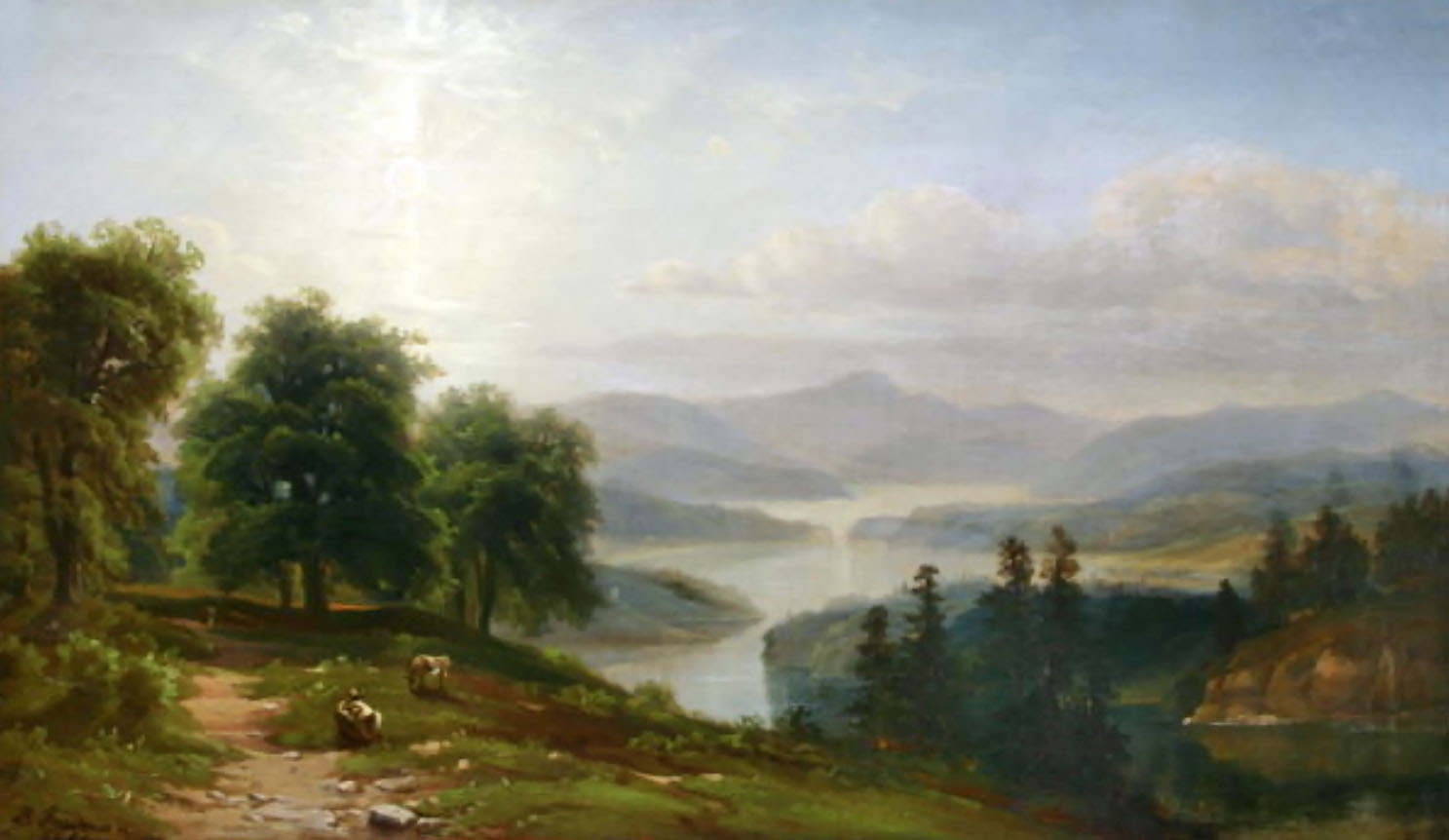
Red Hill Views of Squam Lake
An illustration similar to Bartlett’s (top of page), date unknown, shows the view in the opposite direction, towards Squam Lake.
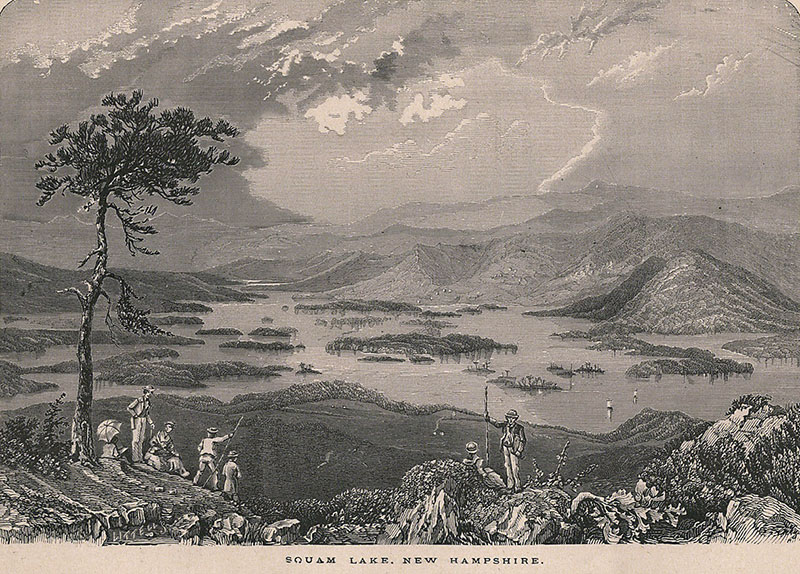
Here are views from Red Hill of Squam Lake, which is visible from Eagle Cliff, lower in elevation and on the backside of Red Hill. The first photo is from John Soule’s 1870’s White Mountain Scenery stereoview series. The second photo appeared in a 1930’s vintage guidebook, “The Lakes Region of New Hampshire”, published by the Lakes Region Association. Click here for a similar, beautiful, modern-day view of Squam Lake from Eagle Cliff.
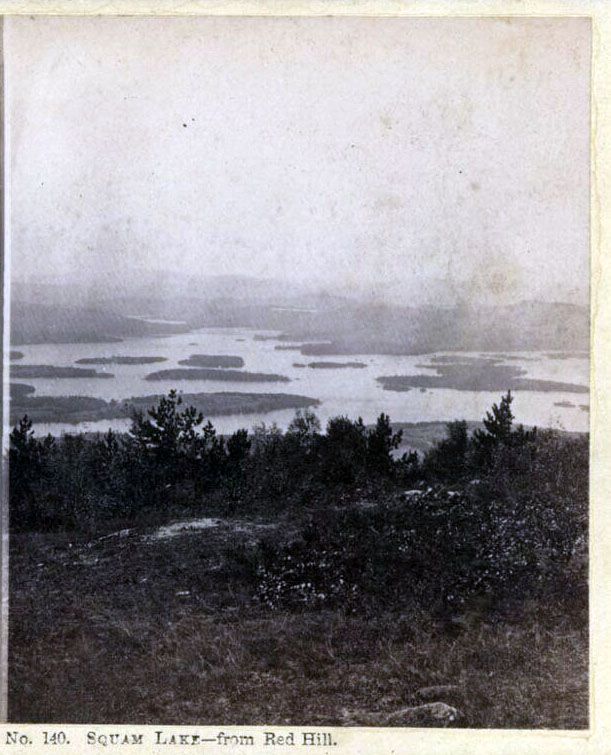
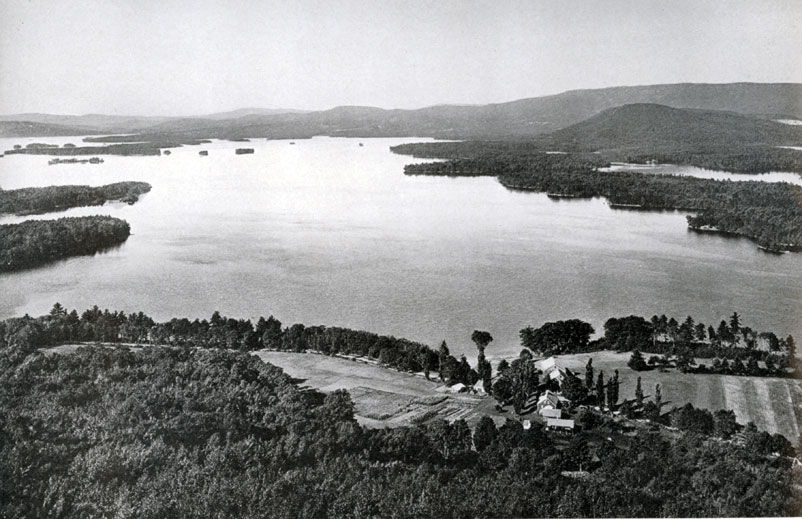
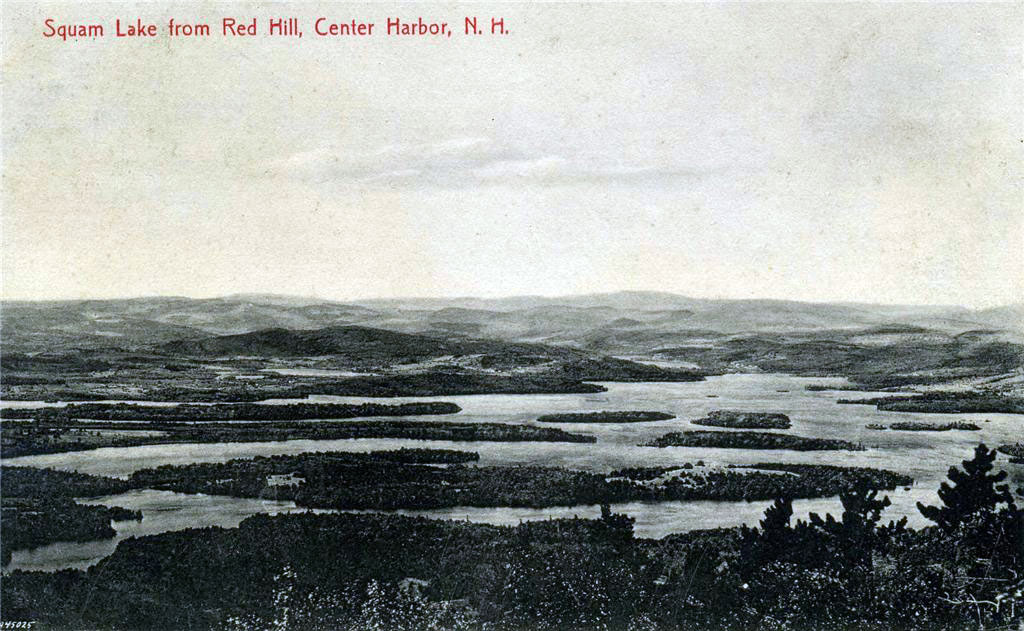
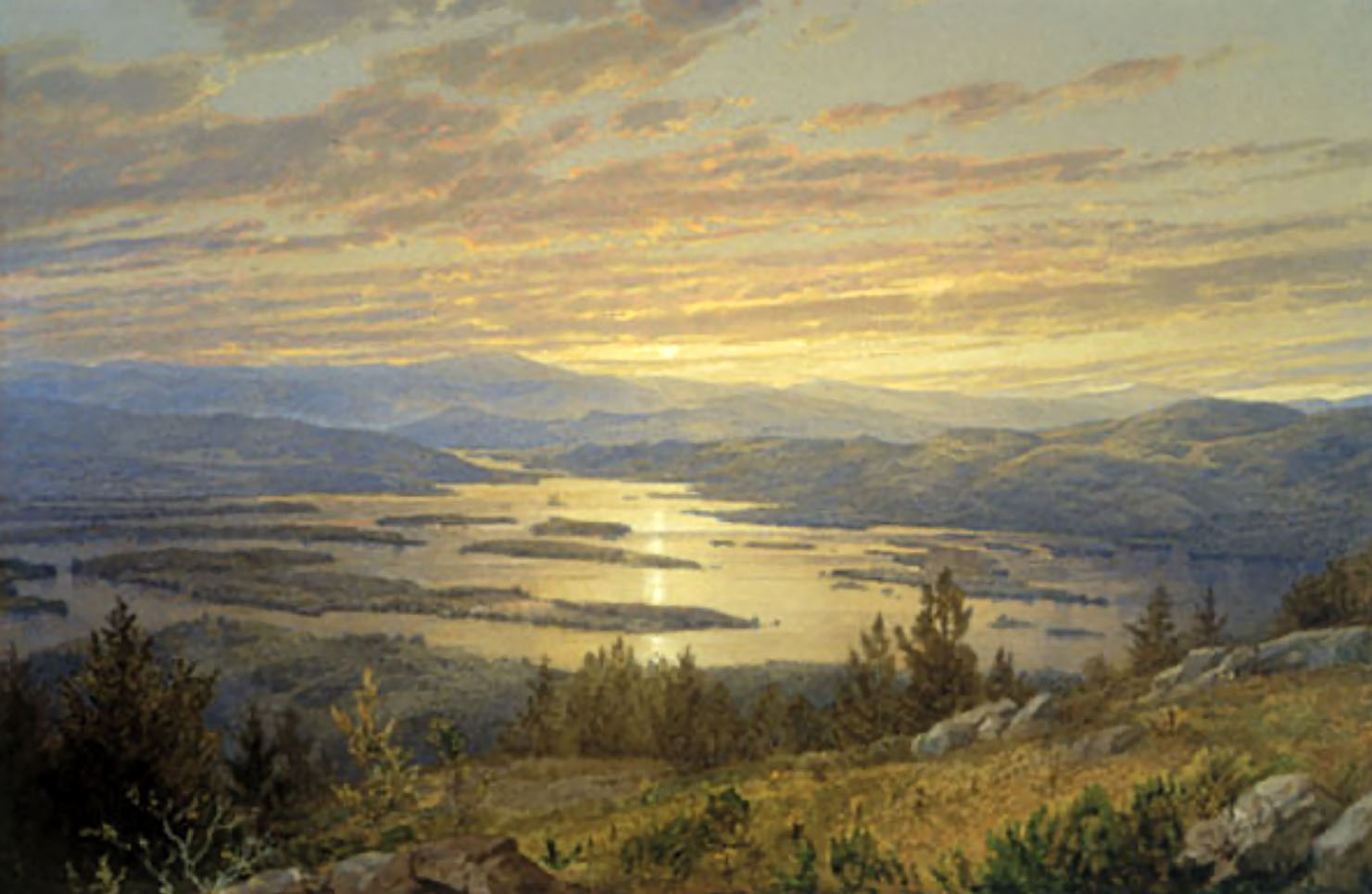
An oil painting of “Squam Lake from Red Hill” by William Trost Richards.
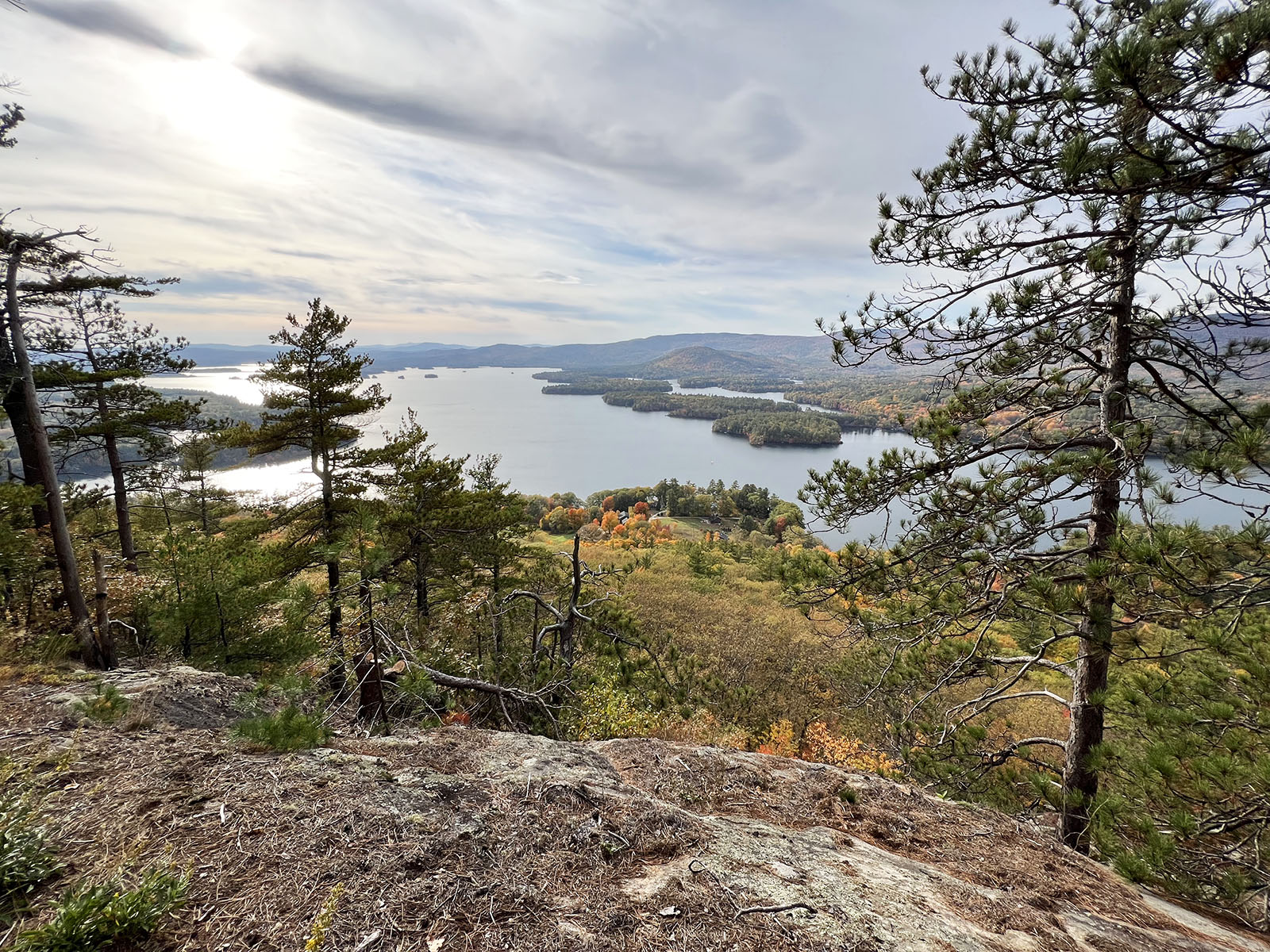
A photo by the webmaster of Squam Lake. Taken from Eagle Cliff, a spur of Red Hill, on October 12, 2022.
Views of Red Hill
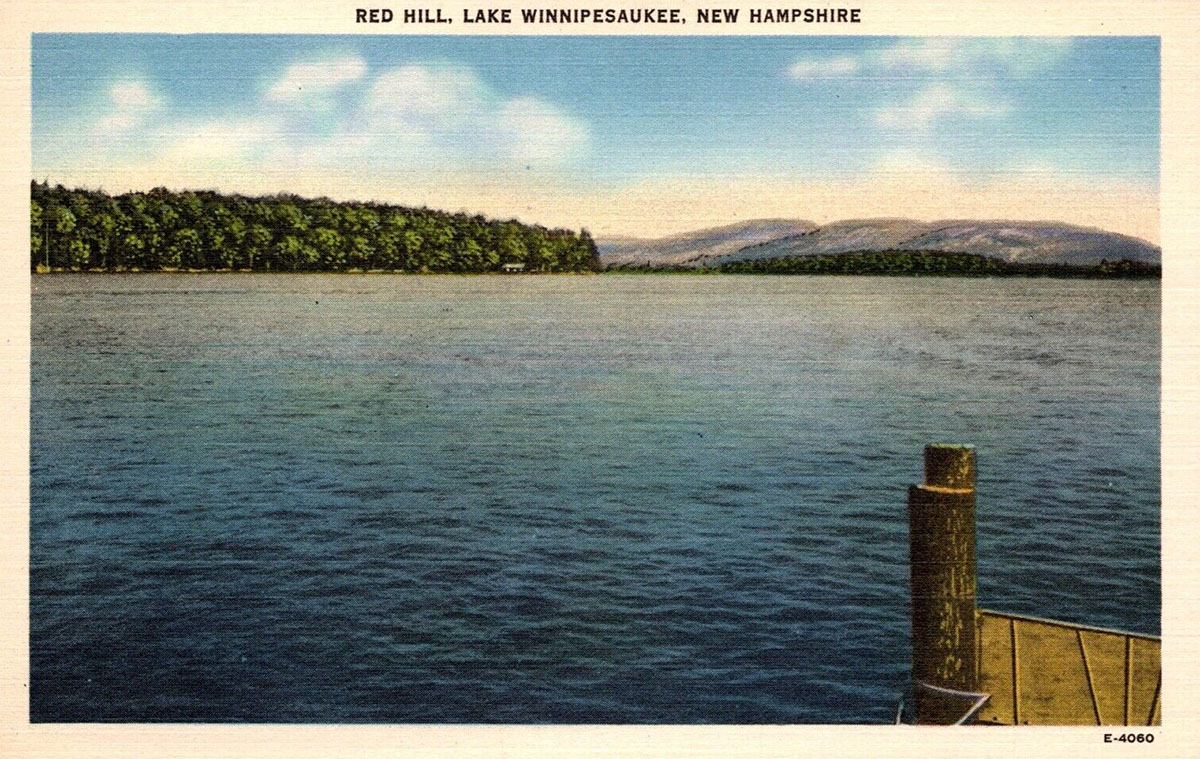
A white border, linen postcard shows a stylized view of Red Hill from Lake Winnipesaukee. This is not an accurate depiction of the view.
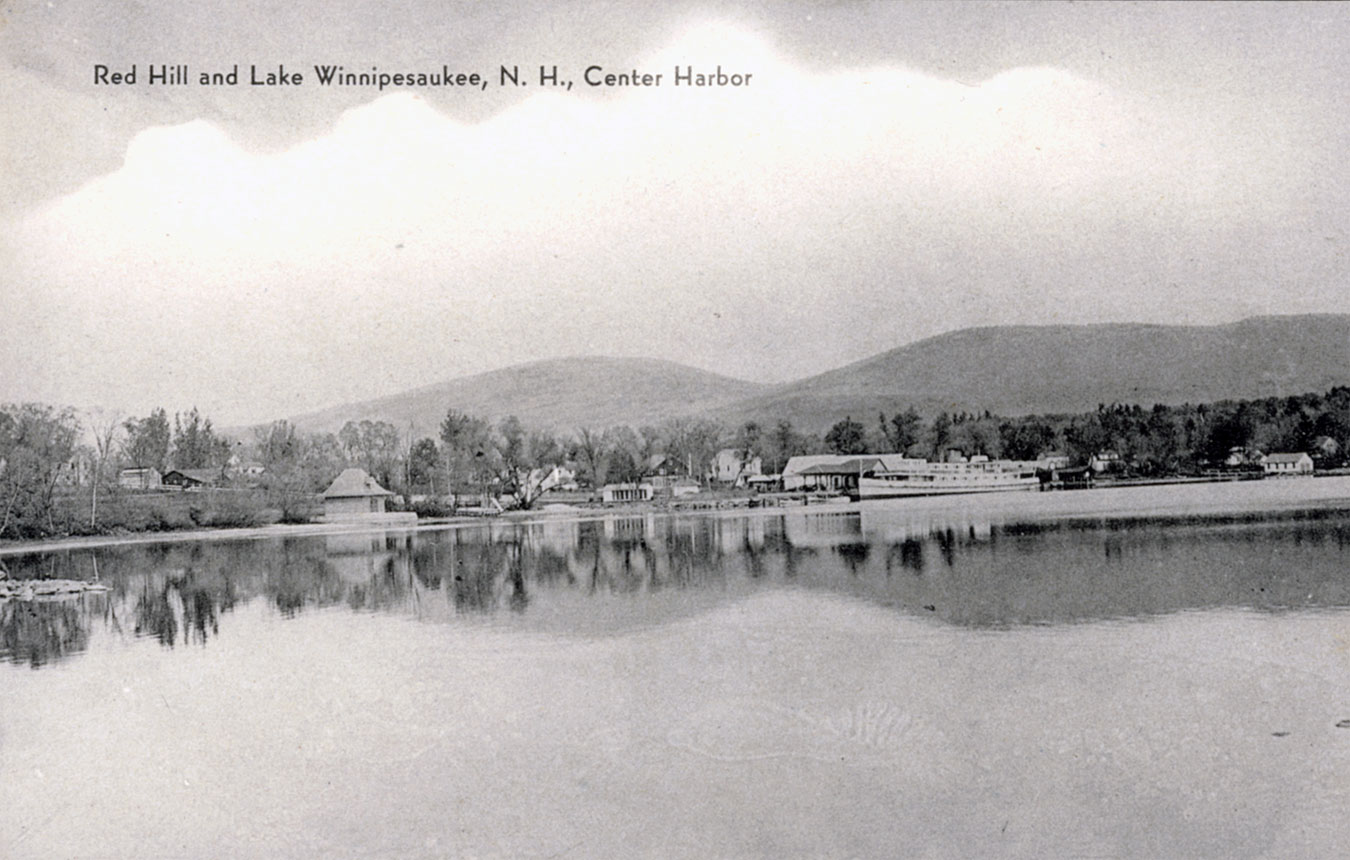
A 1930s black and white postcard shows Red Hill from Lake Winnipesaukee.
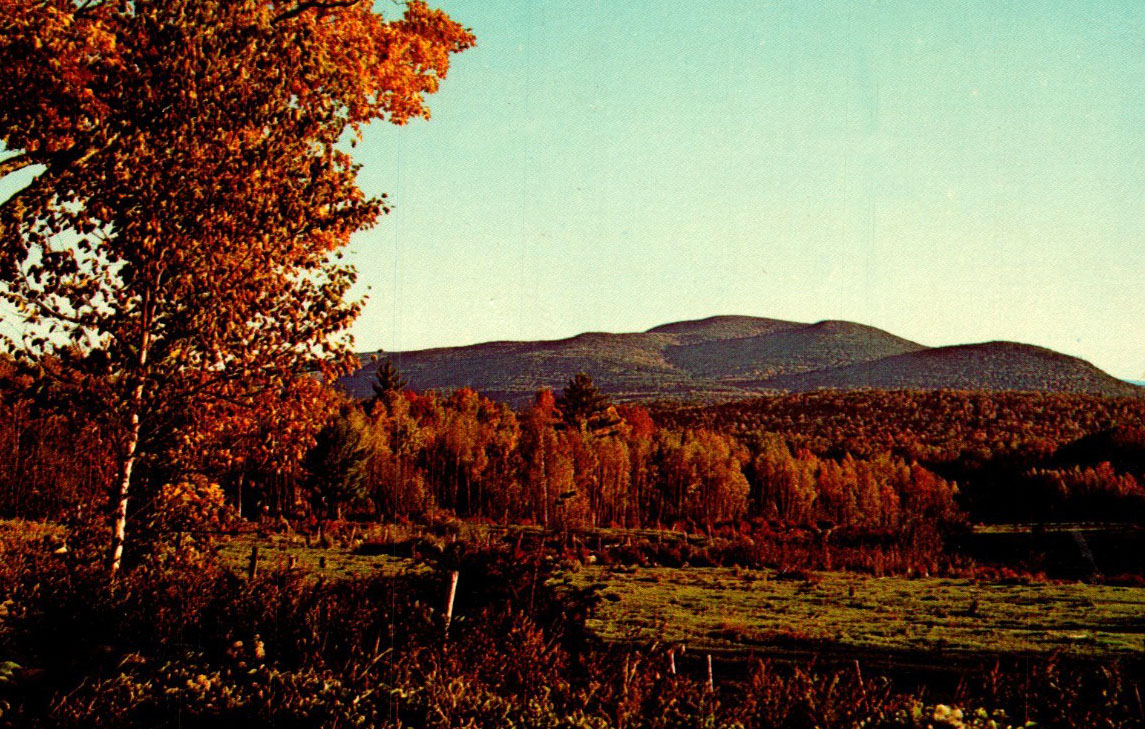
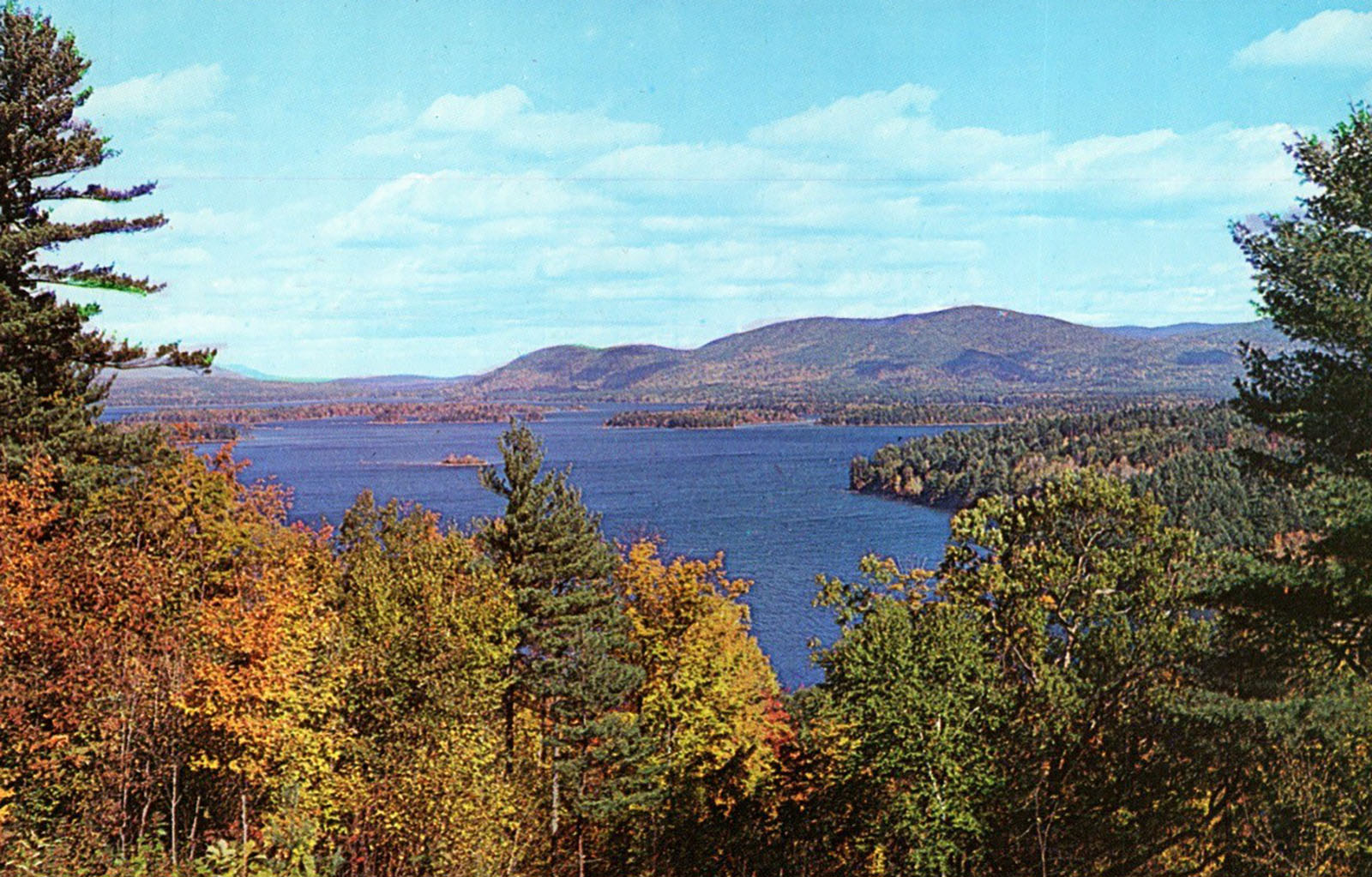
A 1960s chrome postcard shows an autumn view over Squam Lake towards of Red Hill.
Fall view of Red Hill from Squam Lake.
Fall view of Red Hill from a Center Harbor farm shows its rarely seen back side.