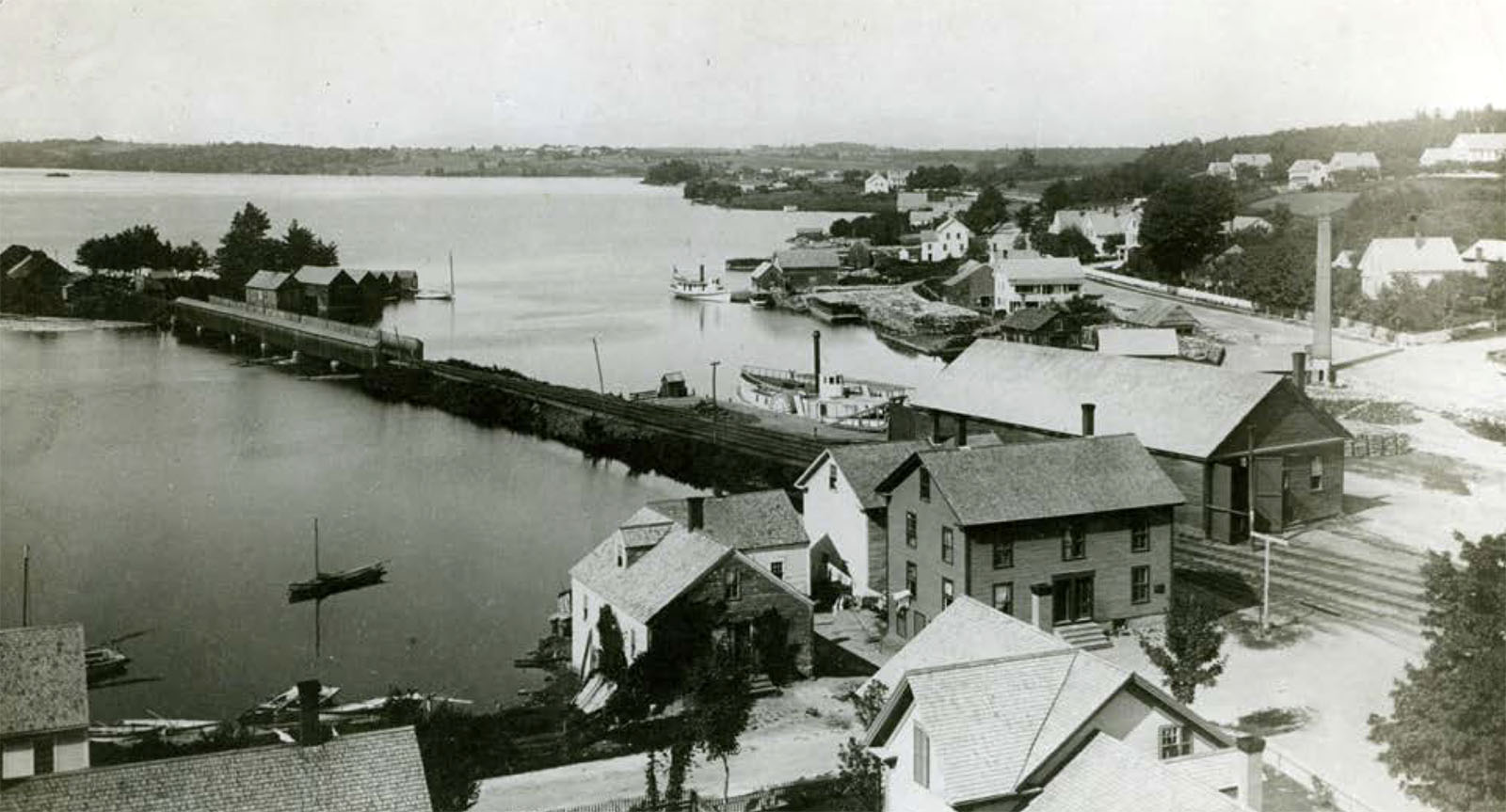








Other Steamships
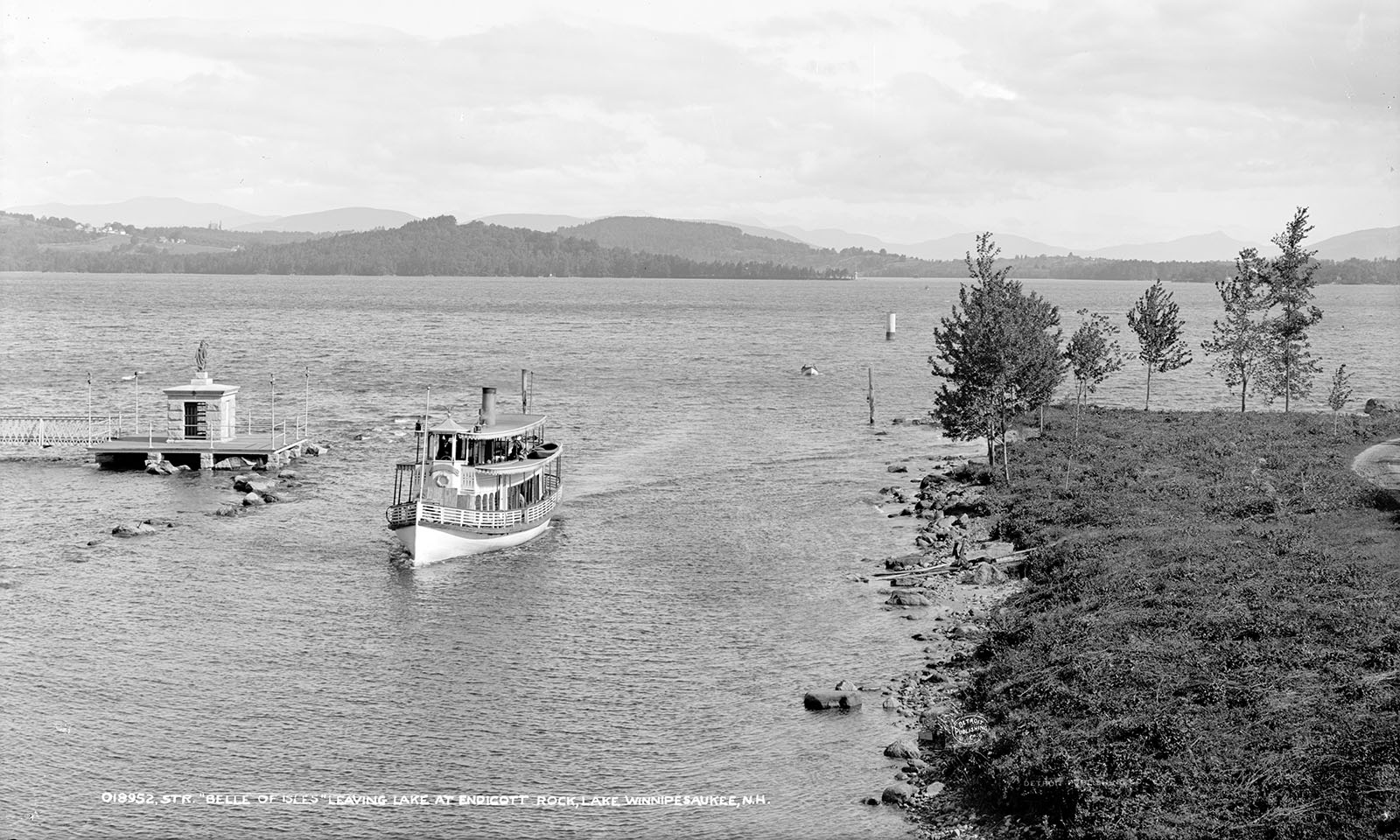
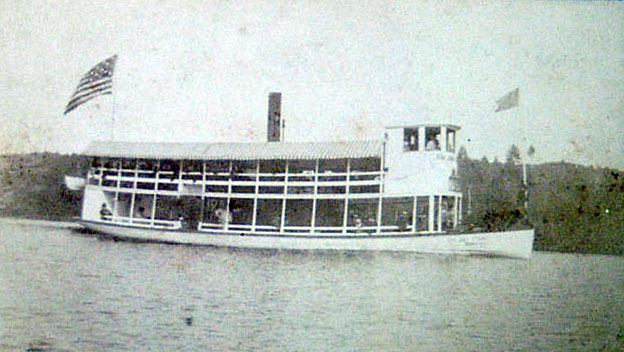
The Belle of the Isles
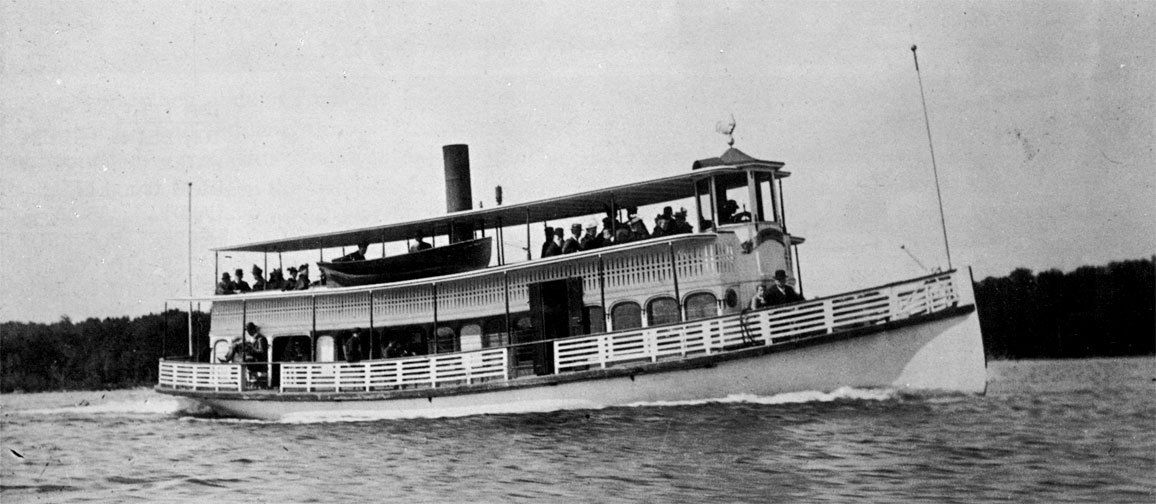
In 1891, Dr. J.A. Greene, future owner of the New Hotel Weirs, brought a canal boat named the Carroll from upper New York state to Lake Winnipesaukee. Dr. Greene rebuilt her and renamed her the Roxmont, after his Roxmont Poultry Farm on Moultonborough Neck and his Roxmont Castle on Long Island. He put her into regular steamship service from Weirs Beach to various stops around the Lake, including Long, Birch and Jolly Islands, Lakeport, and Melvin Village. He was the acting engineer on the Roxmont until 1894, where “…his greatest delight was to wipe a smear across his forehead with an oily rag, then climb up out of the engine room where he could be seen, and hear the shocked summer visitors at the Weirs wharf inquire, ‘Is that greasy looking man the famous Dr. Greene?’…”. Around 1896, the Roxmont Farm went out of business and the steamer as well. She was hauled out of the water onto the farm property, where she sat idle for six years. In 1902 Dr. Greene rebuilt her once again, rechristened her as the Belle of the Isles, and put her back into service on the Lakeport to Weirs Beach to Melvin Village run. During the building of the Castle in the Clouds, “…many hundreds of Italian laborers were brought from Boston to The Weirs by train and transported from there to Melvin by Belle of the Isles.” Purchased by the Winnipesaukee Transportation Company from Dr. Greene around 1904, she continued in active service until she was retired in 1914.
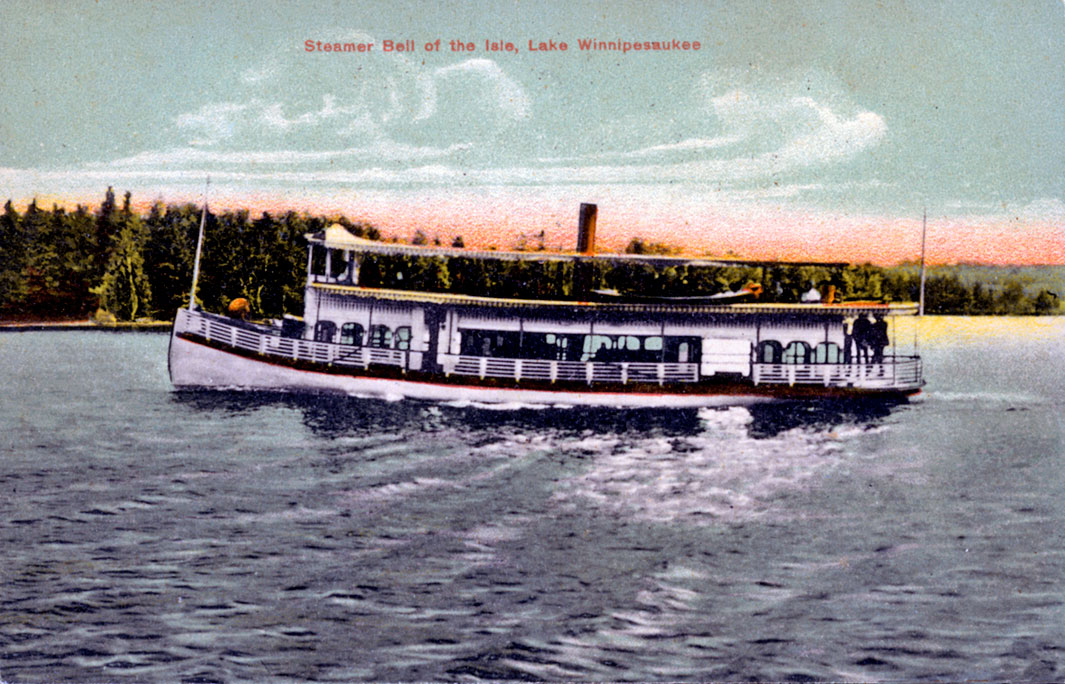
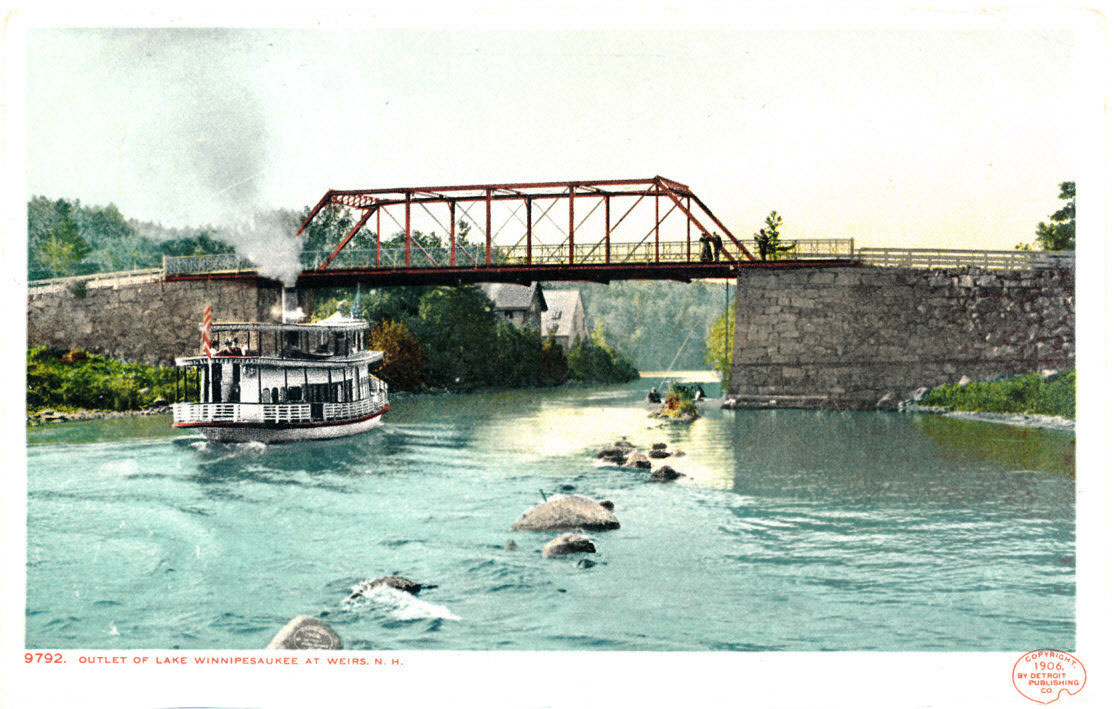
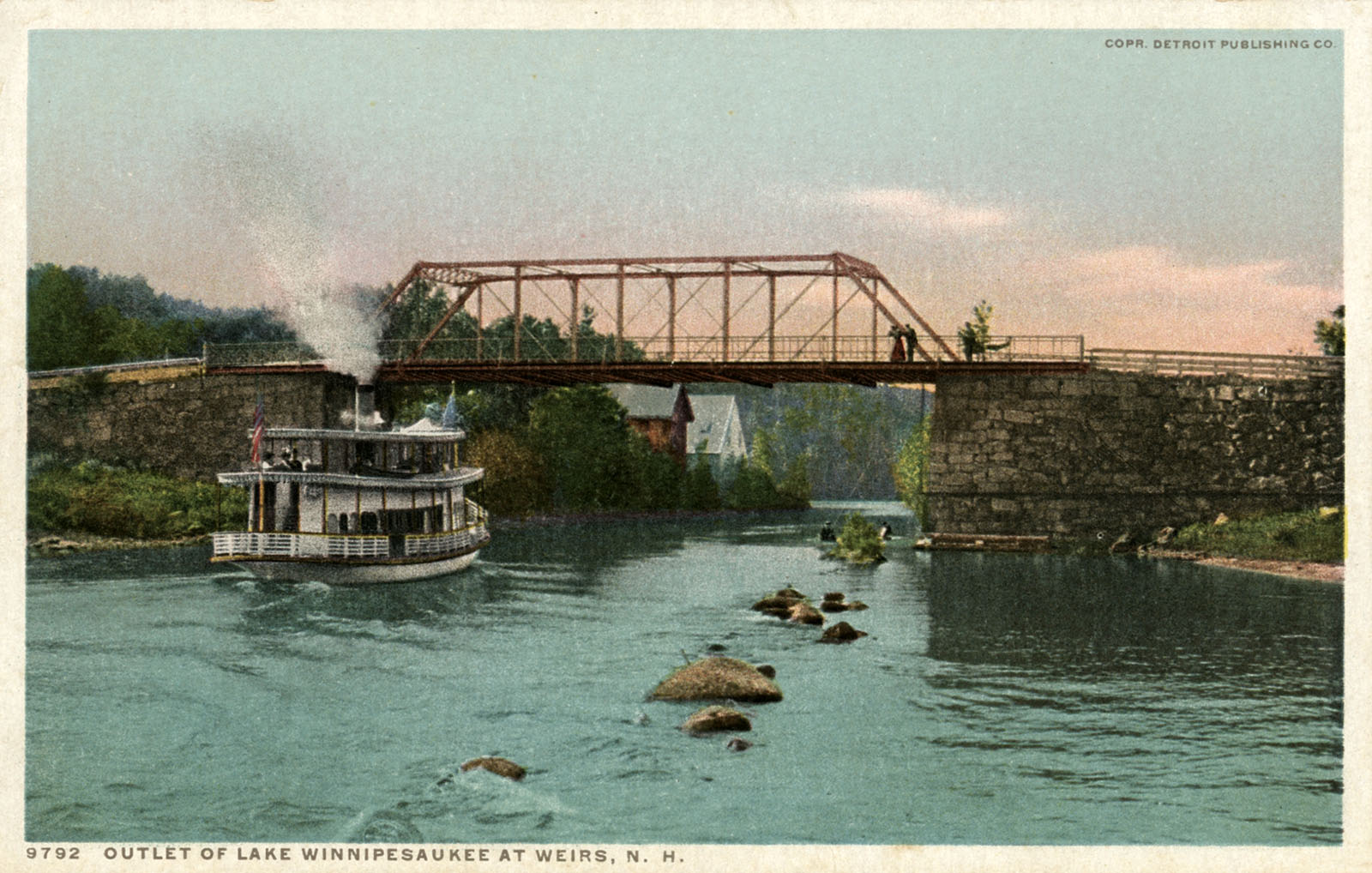
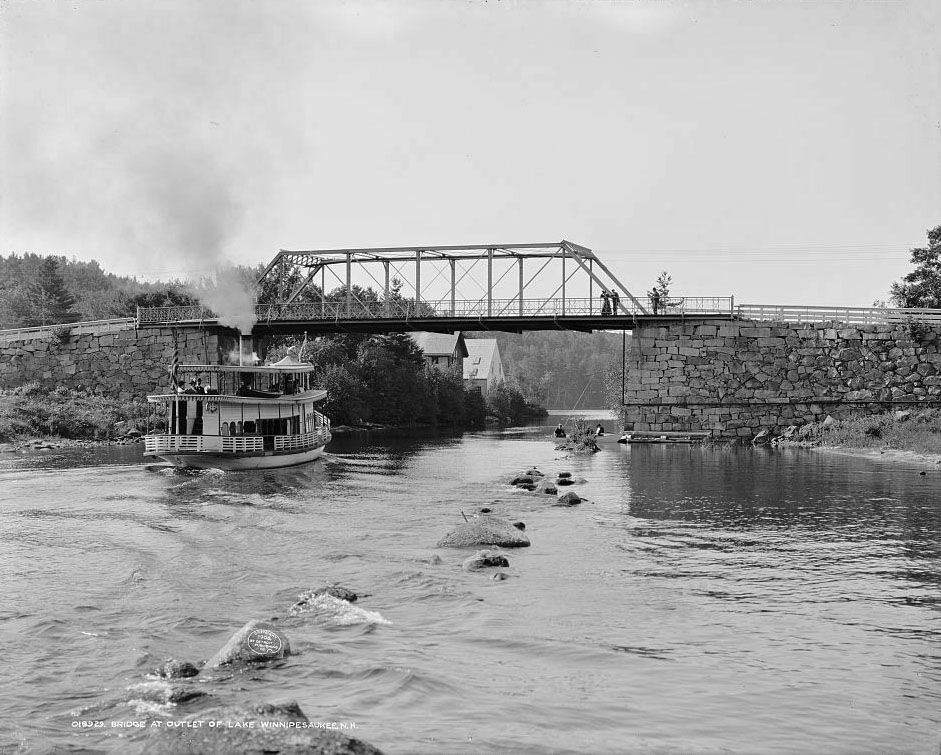
Circa 1906, the Belle of the Isles heads towards the steel truss bridge that spans the Weirs Channel while two bystanders on the bridge watch her approach. The postcard artist has humorously drawn the Detroit Publishing logo onto the foreground rock in the Channel. The first two images show the colorized postcard version, followed by the original, black and white photo.
The Maid of the Isles
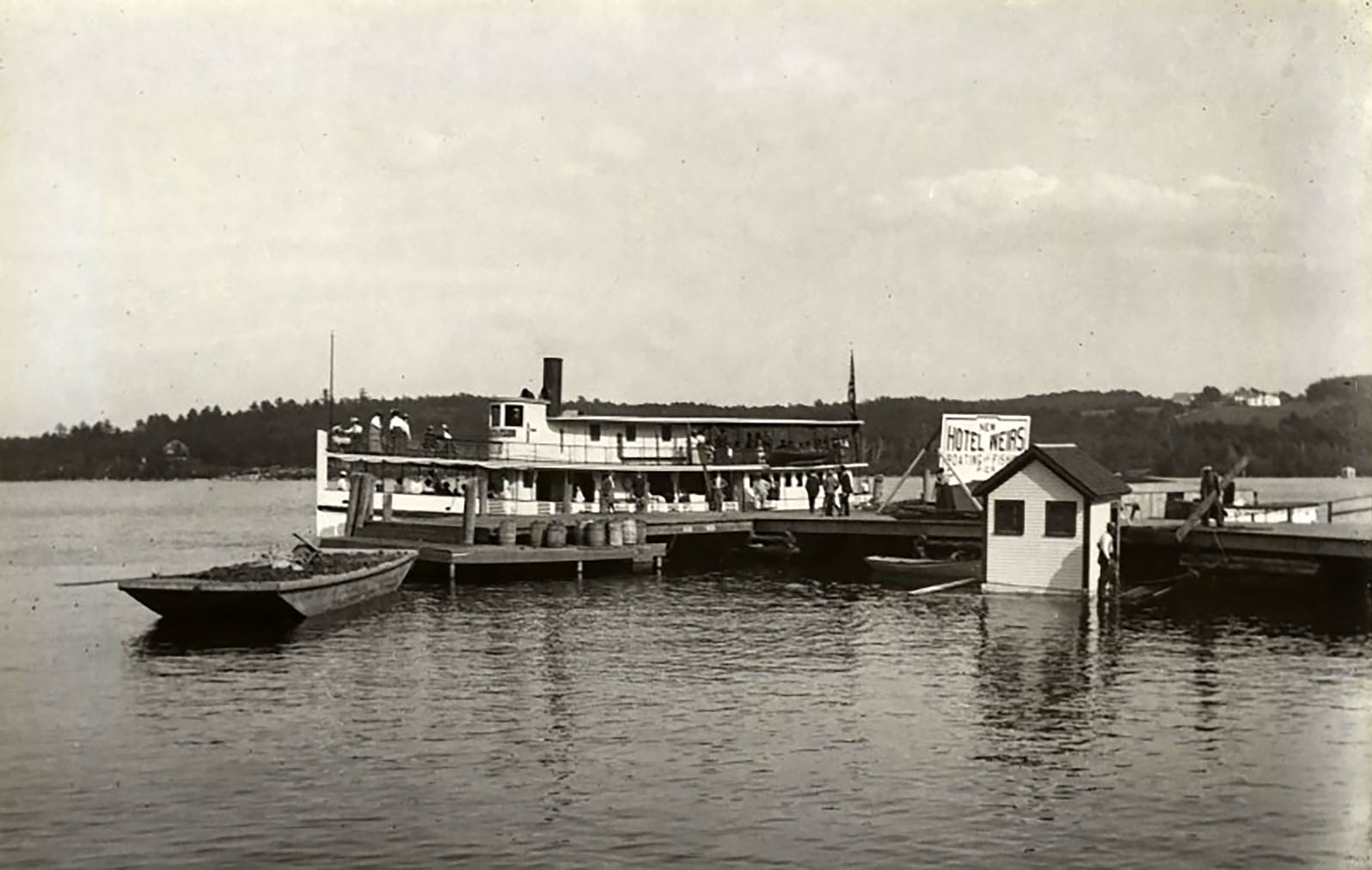
Not be confused with the Belle of the Isles was the Maid of the Isles steamship. First called the “Gazelle”, the Maid of the Isles was built in 1876-1877 in Wolfeboro at a cost of $16,000. The steamship was 96 feet long, with a 500-passenger capacity, and was one of the first larger steamships on the lake outfitted with a propeller instead of paddewheels. It was a speedy steamboat for its size, and could challenge the Mount Washington, hence the original name “Gazelle”. After only a few years of service, the Gazelle sank off of the Wolfeboro “Navy Yard” shipyard at Sewalls Point when loose boards allowed water to fill her hull. She was raised in 1887 by Herbert A. Blackstone and put back into service in 1890 as the renamed Maid of the Isles. The Maid provided 10 years of solid service on the Lake before she sank again, in Lakeport in 1900. Raised one last time and towed to Center Harbor for repairs, she was set afire by “jokesters” on Independence Day 1901, ending her career for good.
Here is an amusing account of an 1898 race between the Maid of the Isles and the Mount Washington, which the Maid won, barely. (From an article written by Bruce Heald for the Weirs Times newspaper.)
“During the summer of 1898, the Maid of the Isles was returning to Centre Harbor with a group of tourists. The passengers were predominately of Irish blood and most of them were guests of the Garnet Inn and the Moulton House, hostelries that were especially popular with summer visitors from South Boston and Dorchester. The Maid of the Isles was their favorite excursion steamer, and during these morning sails their voices were usually raised in song. This was so enjoyable for the crew members of the Maid of the Isles that they looked forward each summer to these occasions with pleasant anticipation.”
“The Maid of the Isles had passed the Bear Island wharf and was lazing along while sweet Irish voices were enriching the summer air with a rendition of “The Spanish Cavalier.” Suddenly, somebody called out, “Here comes the Mount!” Sure enough, the Mount Washington had rounded the end of Pine Island and was rapidly overhauling the Maid of the Isles. She was abeam of the Maid when the two steamers were abreast of Beaver Island, and a band on the Mount Washington struck up the tune “The Girl I Left Behind Me.”
“That did it. Captain Blackstone stepped into the pilot house with his pilot, Elmer Davis, and shouted down the speaking tube to the engine room. “Open her up Will!” he exclaimed to his engineer. Will did open her up, and now it was the Maid of the Isles’ turn to signal, with a plume of smoke, that she was on her way. The Maid of the Isles passed the Mount Washington off Becky’s Garden, while those happy Irish souls waved and sang in unison, “Goodbye, Goodbye, Goodbye!” The Maid docked at Center Harbor scant minutes ahead of the Mount Washington. Elmer Davis declared victory to the engineer with a “That’s that!”
The Maid of the Isles docked at the New Hotel Weirs Wharf, 1890s
THE SWALLOW
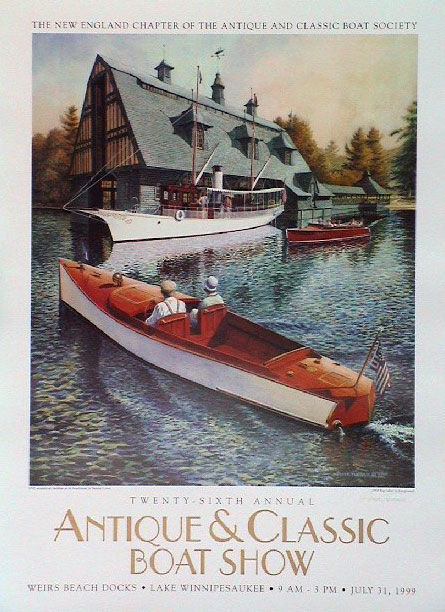
“SWALLOWS NEST” – PROGRAM COVER, 26TH ANNUAL ANTIQUE & CLASSIC BOAT SHOW, WEIRS BEACH DOCKS, JULY 31, 1999, BY PETER FERBER
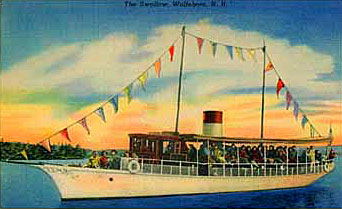
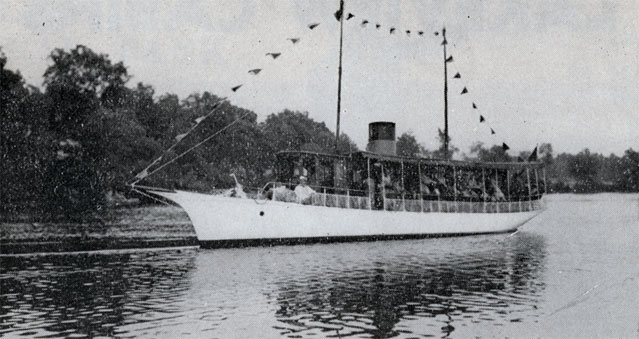
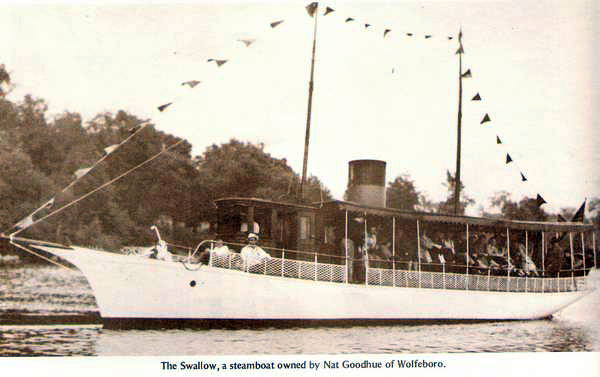
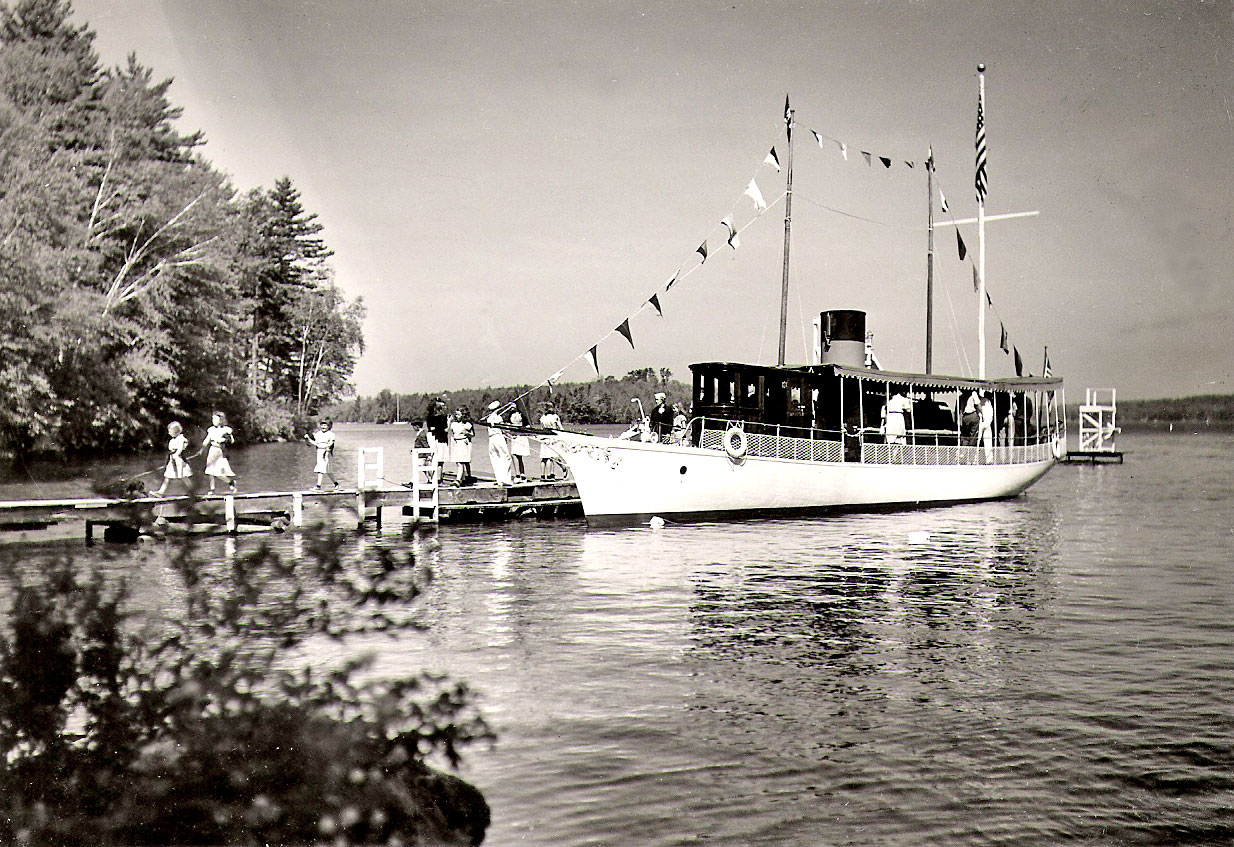
“This magnificent boathouse, still standing today, recalls a long passed era of gracious living. Built to house the private steam-powered yacht Swallow, it includes three story high doors to accommodate its occupant’s masts. The 75′ vessel’s exquisite lines incorporate a fantail stern deck with wicker furniture, a curved front pilothouse, and culminate in a schooner-type bowsprit. This hints at her seagoing origin along the New England coast where she was built at Four Rivers in 1890. Joining in this snapshot of life on Lake Winnipesaukee in the 1920’s is a sleek and graceful 1908 locally-built laker and the ‘Model A” of family boating, a 22’ Chris Craft Cadet.”
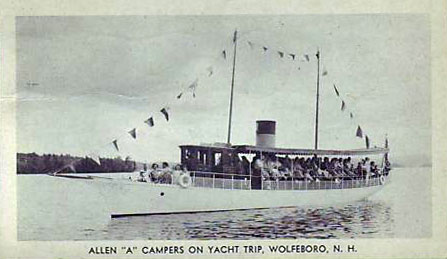
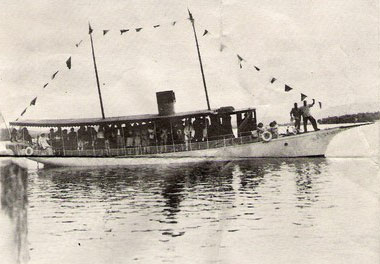
A colorized postcard of the Swallow. A book about the Swallow, subtitled “Lake Winnipesaukee’s most picturesque steam yacht”, written by Jack Gotthardt, can be found online.
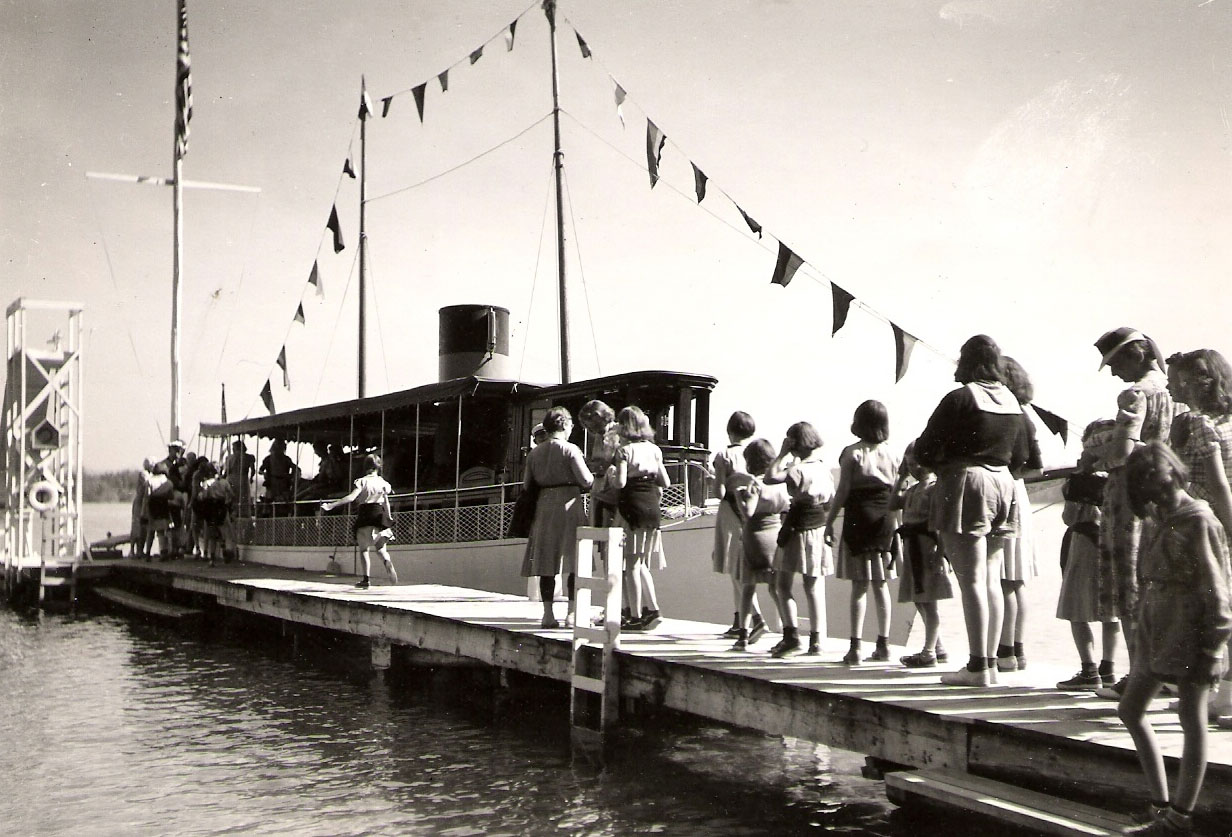
The Flying Yankee
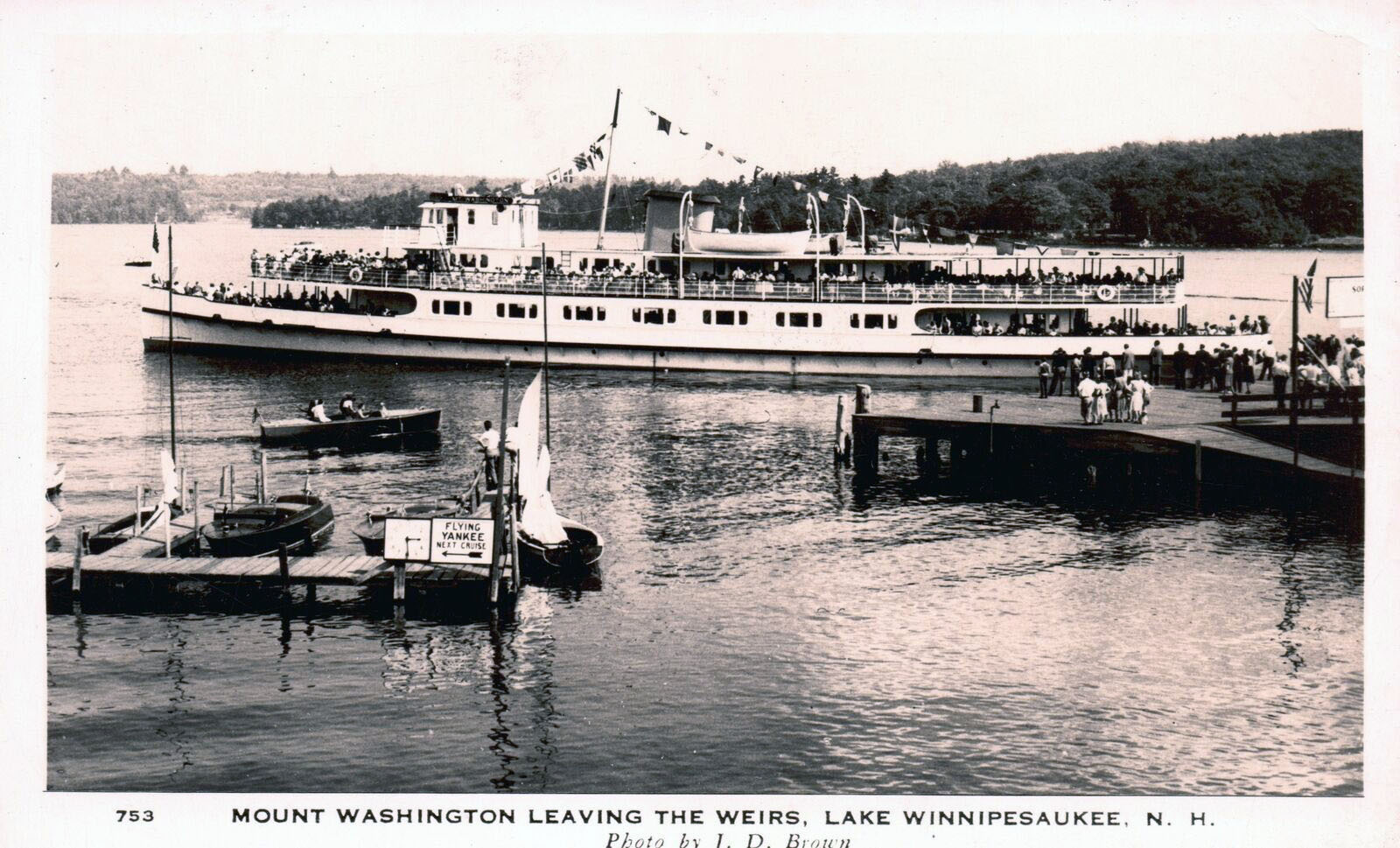
The steamship Flying Yankee offered rides through the 1940s. The photo below shows a sign offering Flying Yankee rides at Irwin’s Winnipesaukee Gardens, while the 1940s version of the Mount Washington cruise ship leaves the Weirs.
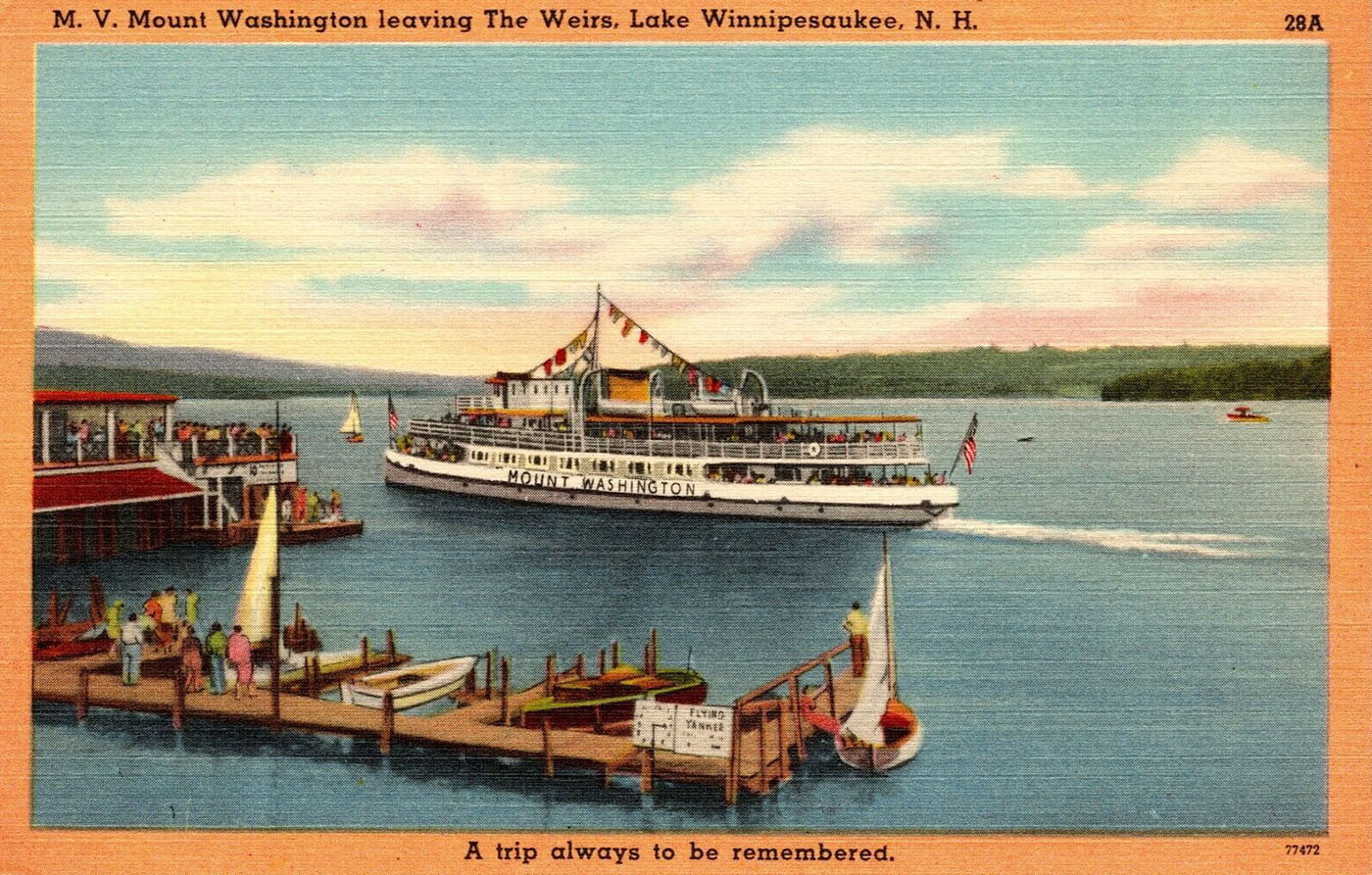
A color linen postcard, postmarked in 1949, shows the “M.V. Mount Washington leaving the Weirs, Lake Winnipesaukee, N.H.”. The postcard caption adds, “A trip always to be remembered.” A crowd at Irwin’s Winnipesaukee Gardens watches the Mount departing. A sign for the Flying Yankee is seen on the docks. The time indicated for the next Flying Yankee cruise, at 3:30pm, is the same as in the previous postcard.
The Lamprey
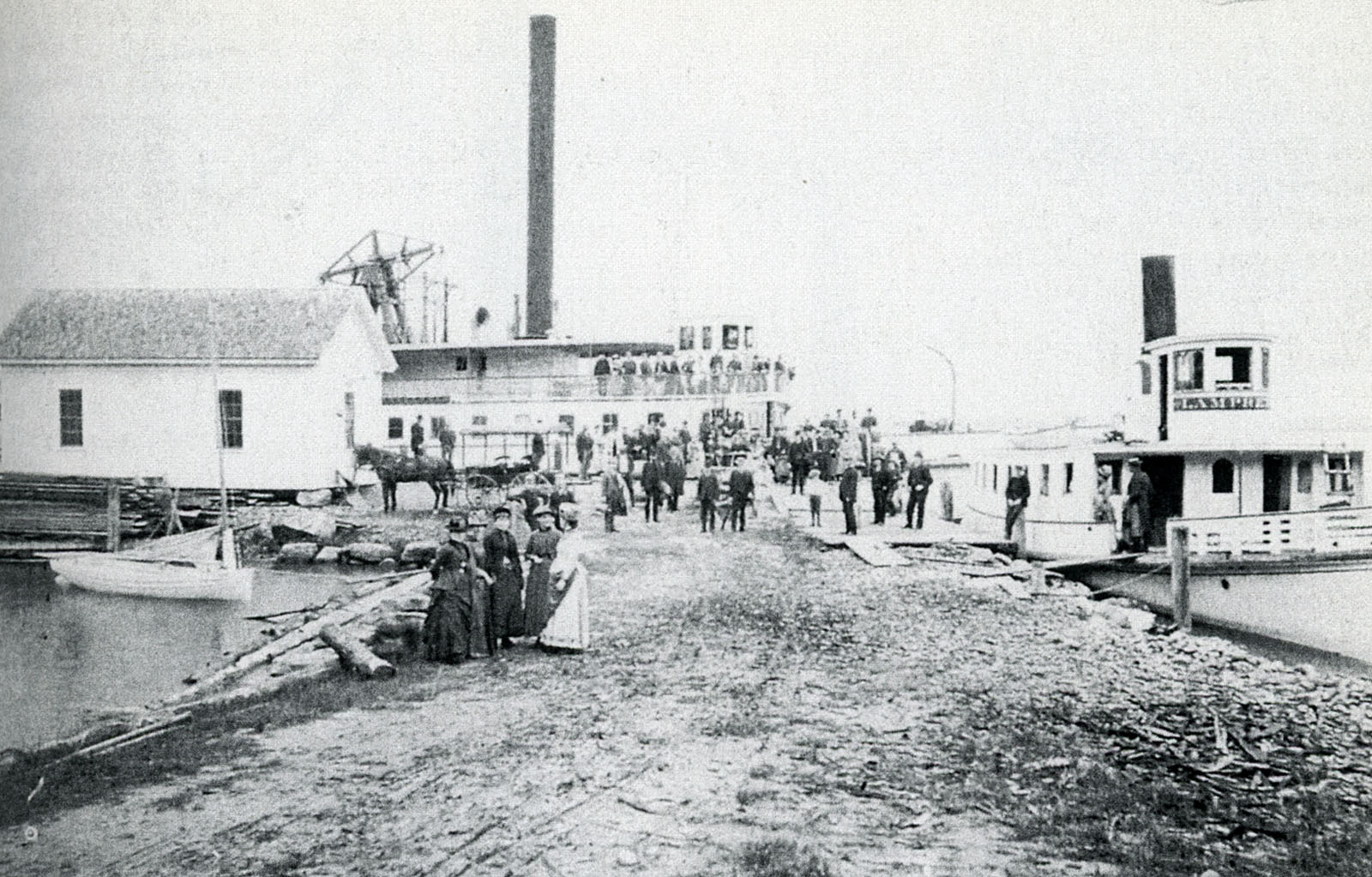
The Lamprey was built at Long Island, on the hull of the earlier paddle-wheel steamer “Montclair”. No paddle wheel can be seen in any of the photographs. A new engine with a propeller drive was installed when it was changed to the Lamprey. Even though the ship had a prop, it was still driven by a steam engine. Diesel and gasoline engines were not commonly used for ship propulsion until the 1920s or later.
Some accounts have the Lamprey confused with the Eagle, a different steamship built in Lakeport in 1886 by Herbert A. Blackstone, later owned by Dr. J. A. Greene, and burned at the Long Island wharf in 1903. It is unknown what happened to the Lamprey.
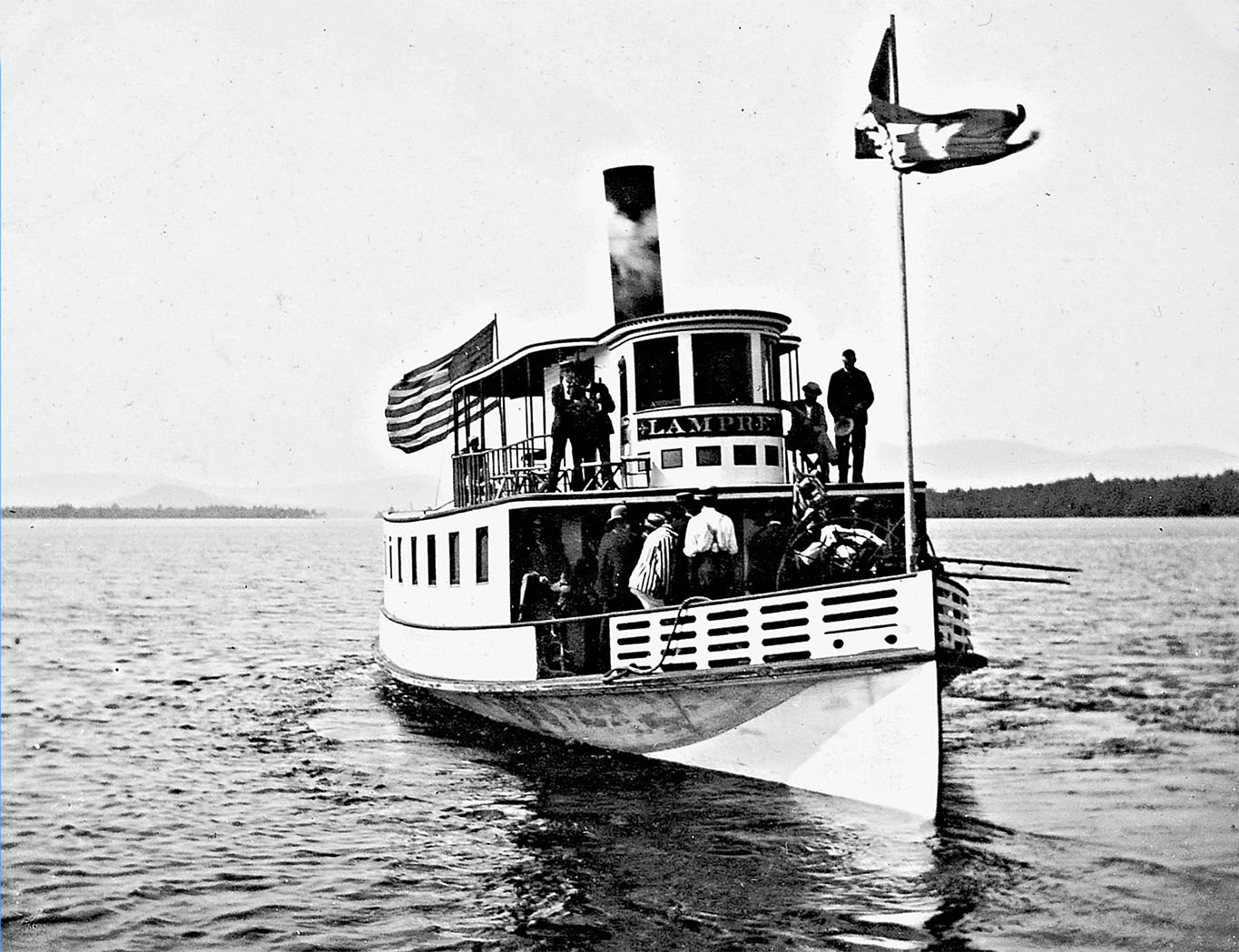
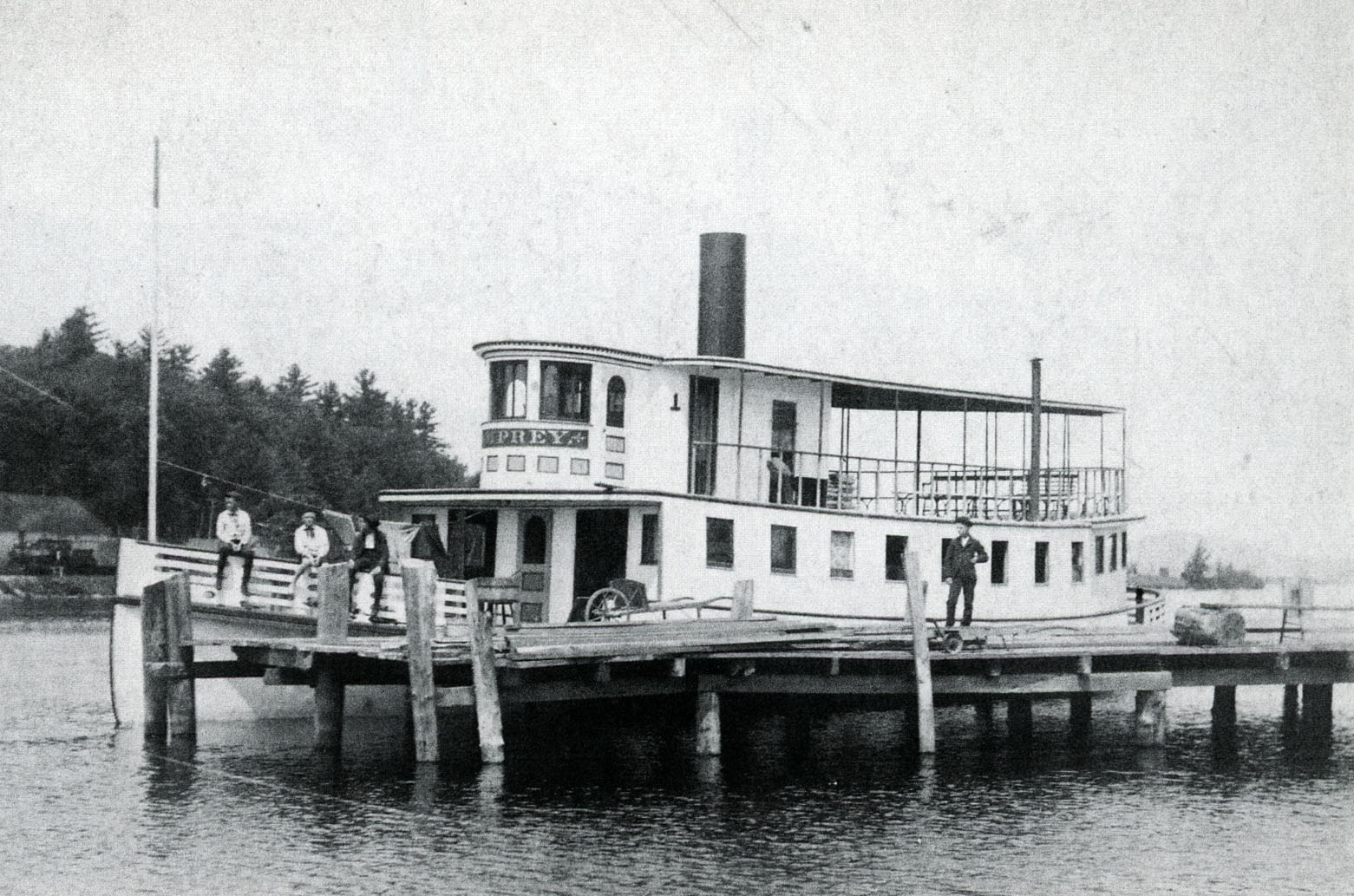
Photo of the Lamprey at the Long Island wharf, with the Mount Washington moored behind.
The James Bell
The James Bell was built in 1866-1867 in Center Harbor. It was named after NH Senator James Bell, who served in the US Congress from July 30, 1855 until his death on May 26, 1857. However, Bell was more widely known as the lead lawyer for the Lake Company, successfully negotiating water rights for the Lowell and Lawrence mills from the small landowners of the Lakes Region.
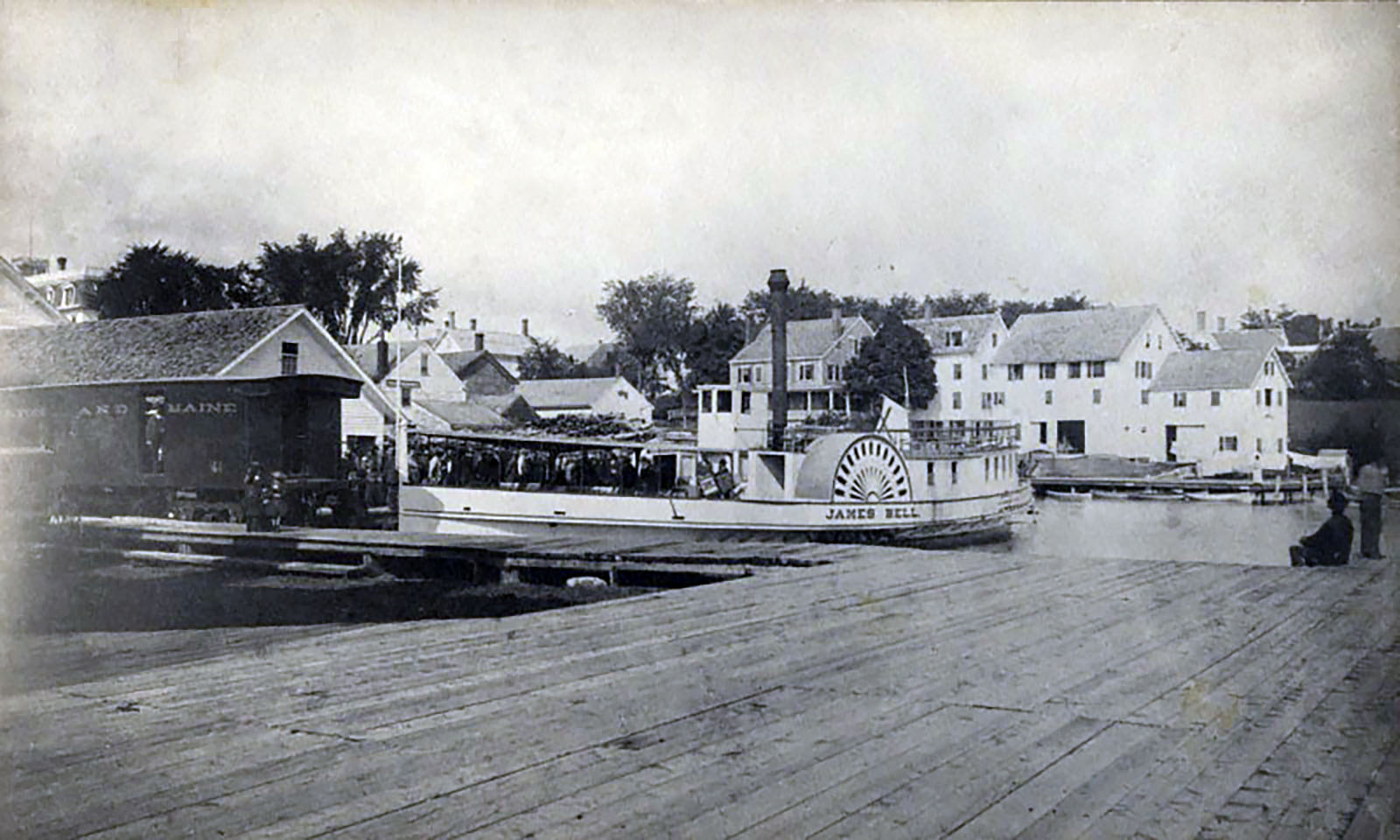
The James Bell was a luxurious steamer for its day, outfitted with window blinds and wooden roller bearings for quieter operation. It had a capacity of 350 people, and was based at the Weirs, beginning service in 1868. After a few years, the Boston & Maine railroad purchased the steamer and discontinued its regular passenger service, which competed against the B&Ms own steamship, the Mount Washington, based in Alton Bay. However, the B&M continued the James Bell’s charter, excursion and moonlight cruises from the Weirs. In November, 1885, the James Bell suffered hull damage when it grounded on rocks in the big lake. It was towed back to Lake Village (Lakeport) by the Mineola on May 21, 1886, where it was dismantled. The cabin of the vessel was saved and it stood on the shore of Paugus Bay near the outlet of Black Brook as a private clubhouse until 1905.
The James Bell in Wolfeboro.
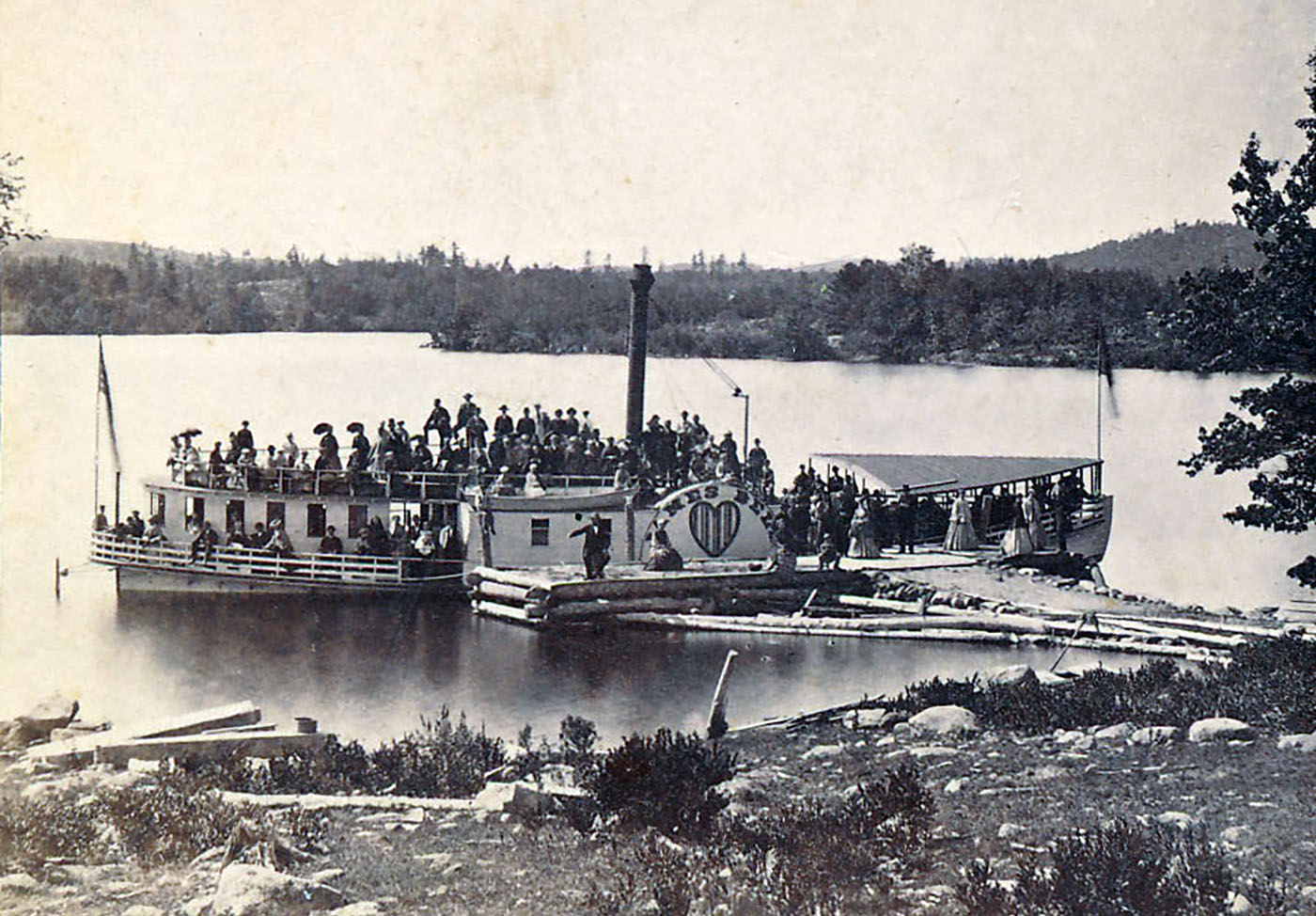
The James Bell on an excursion of the M.E.S. school of Laconia. Notice the heart shaped logo on its side paddlewheel. Curiously, the steamer’s pilot house is not seen in this photo. Perhaps it was added later.
The James Bell in Lakeport in 1875.
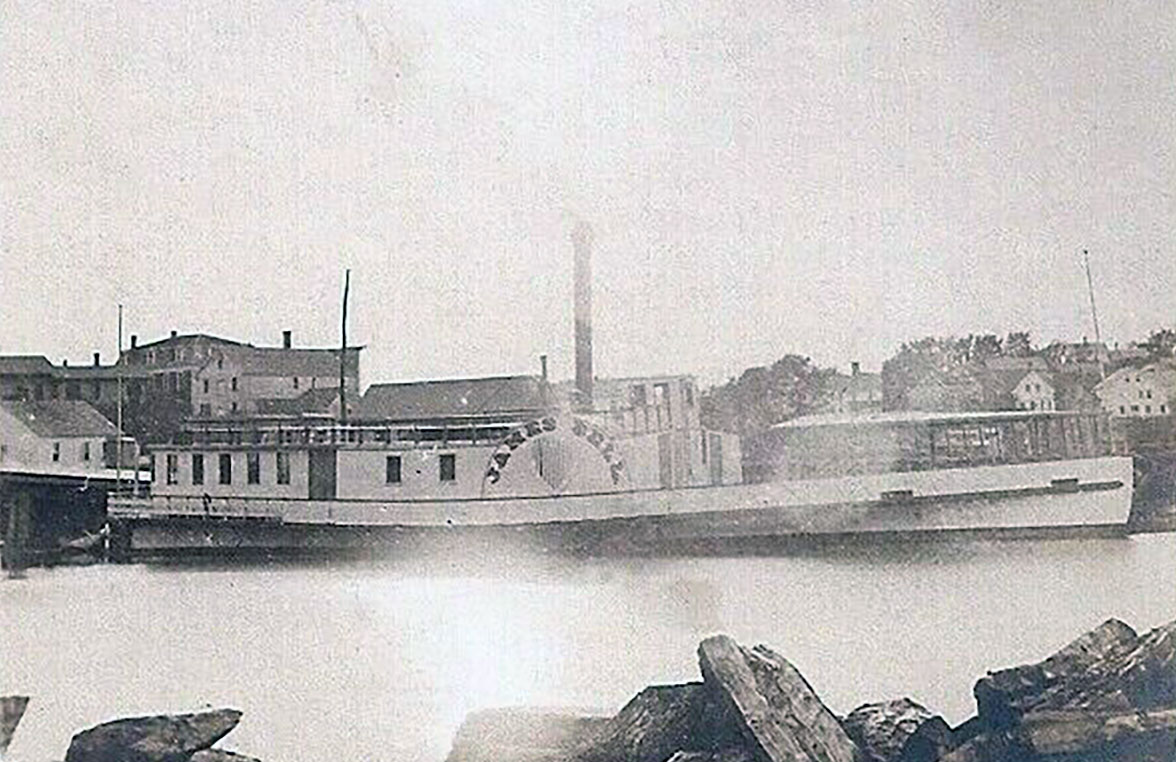
The James Bell is docked near the original Lakeport railroad freight depot, early 1880s.