







The Hotel Weirs Wharf (1885-1908)
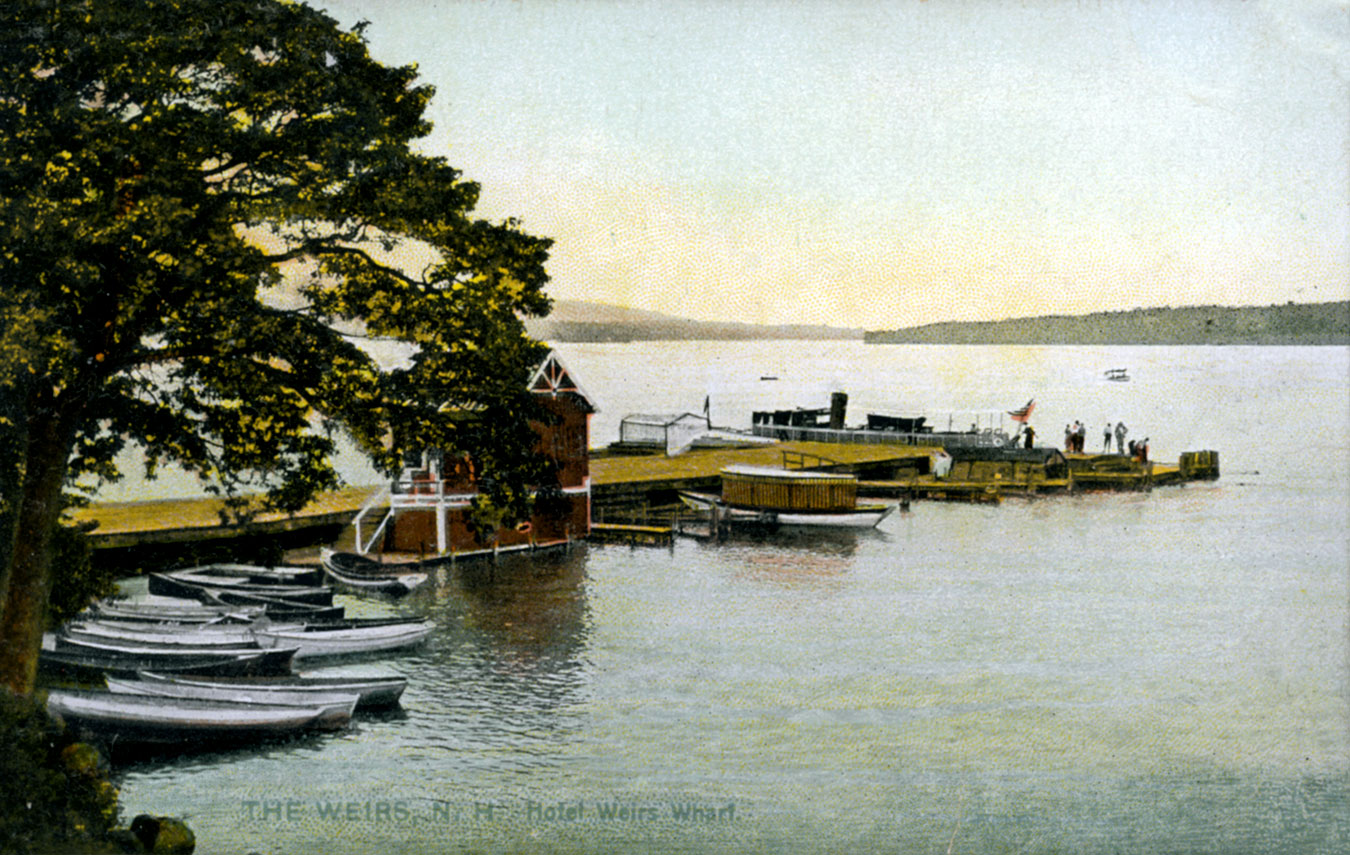
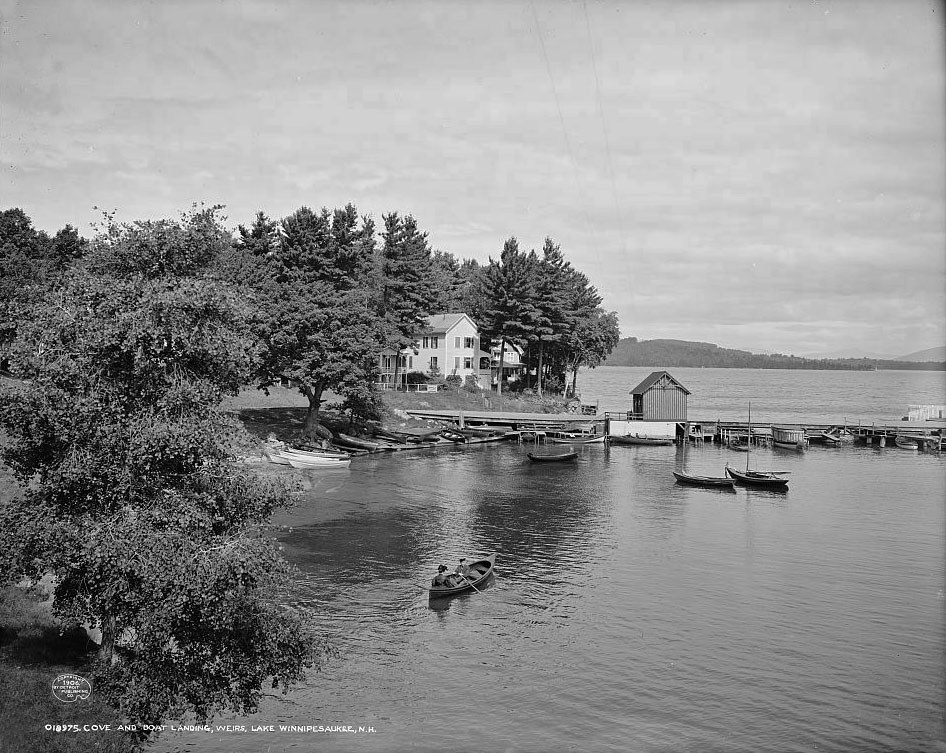
Nearly the same photo as the above postcard.
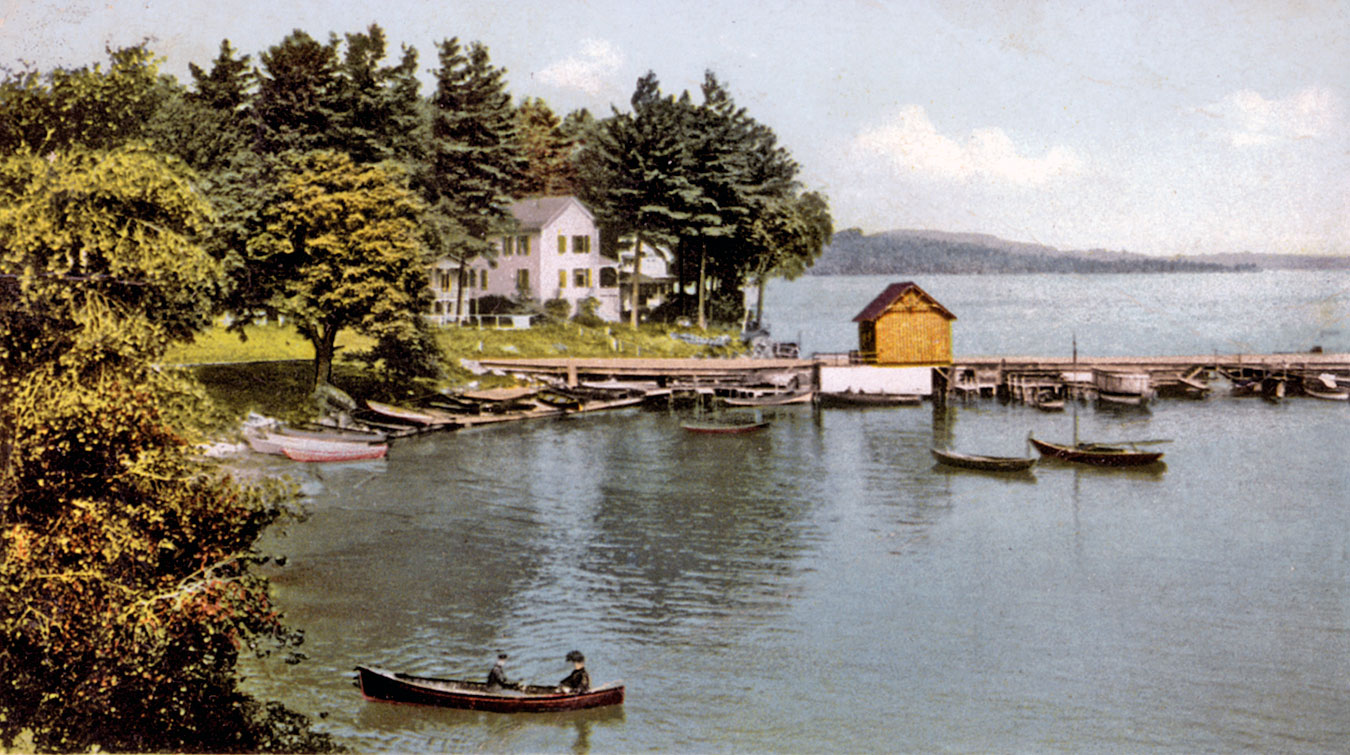
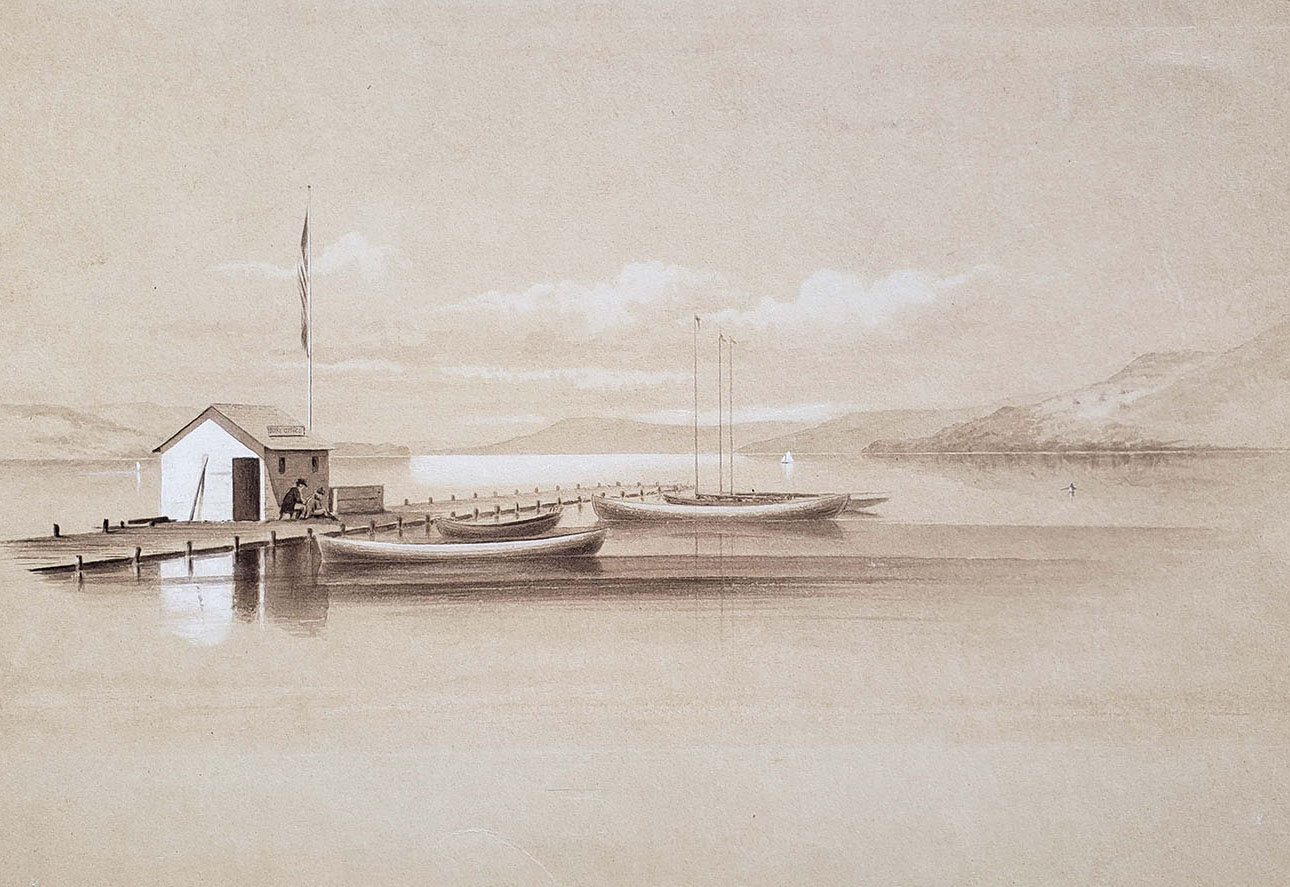
An 1890s artist’s illustration of a post office on a wharf on Lake Winnipesaukee at an unknown location. The illustration seems to match the Hotel Weirs Wharf, although the gable of the small building is turned 90 degrees.
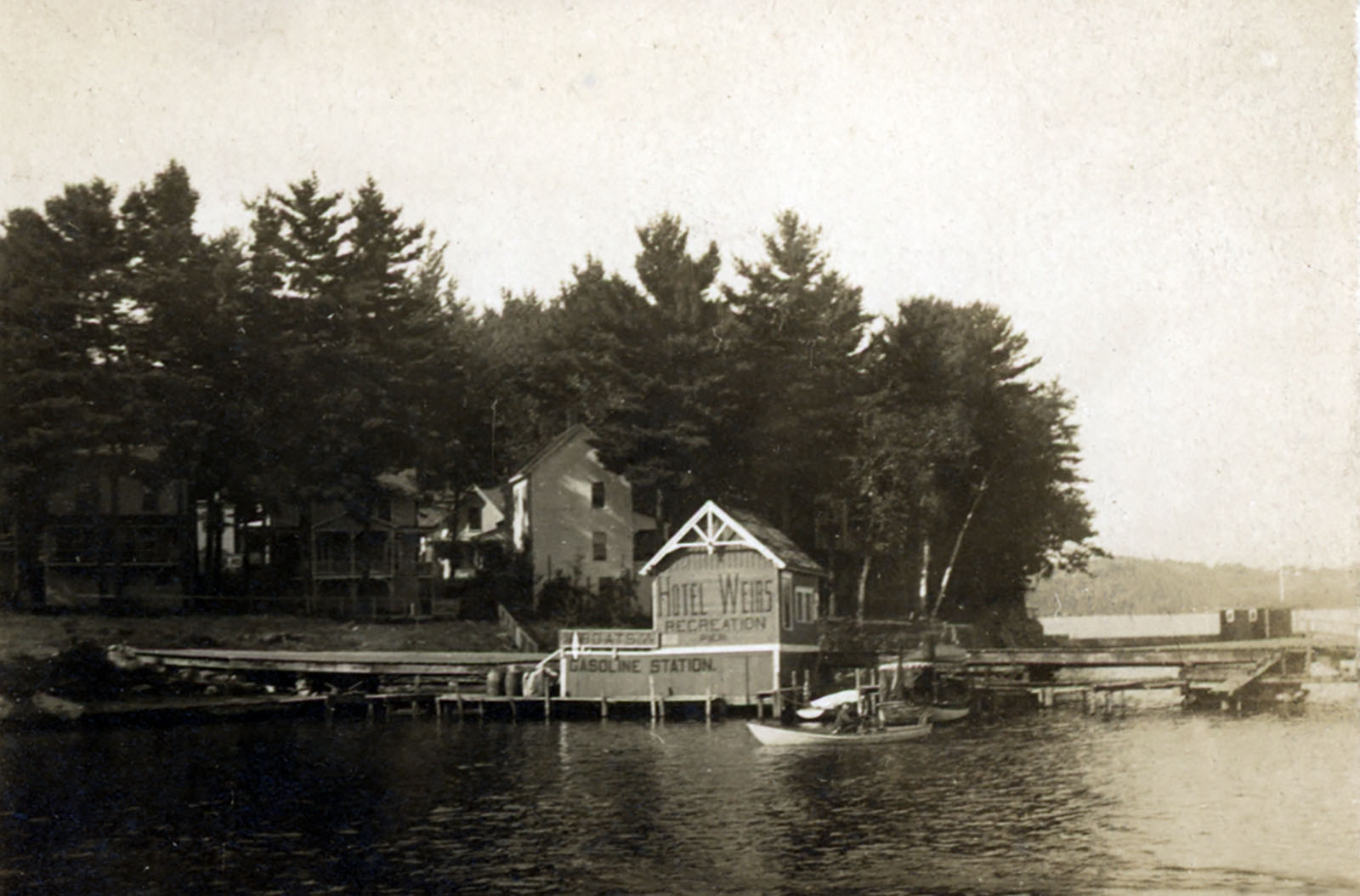
An early postcard shows the building clearly marked as the “Hotel Weirs Recreation Pier”. Also marked on the building was “Gasoline Station” and “Boats”.
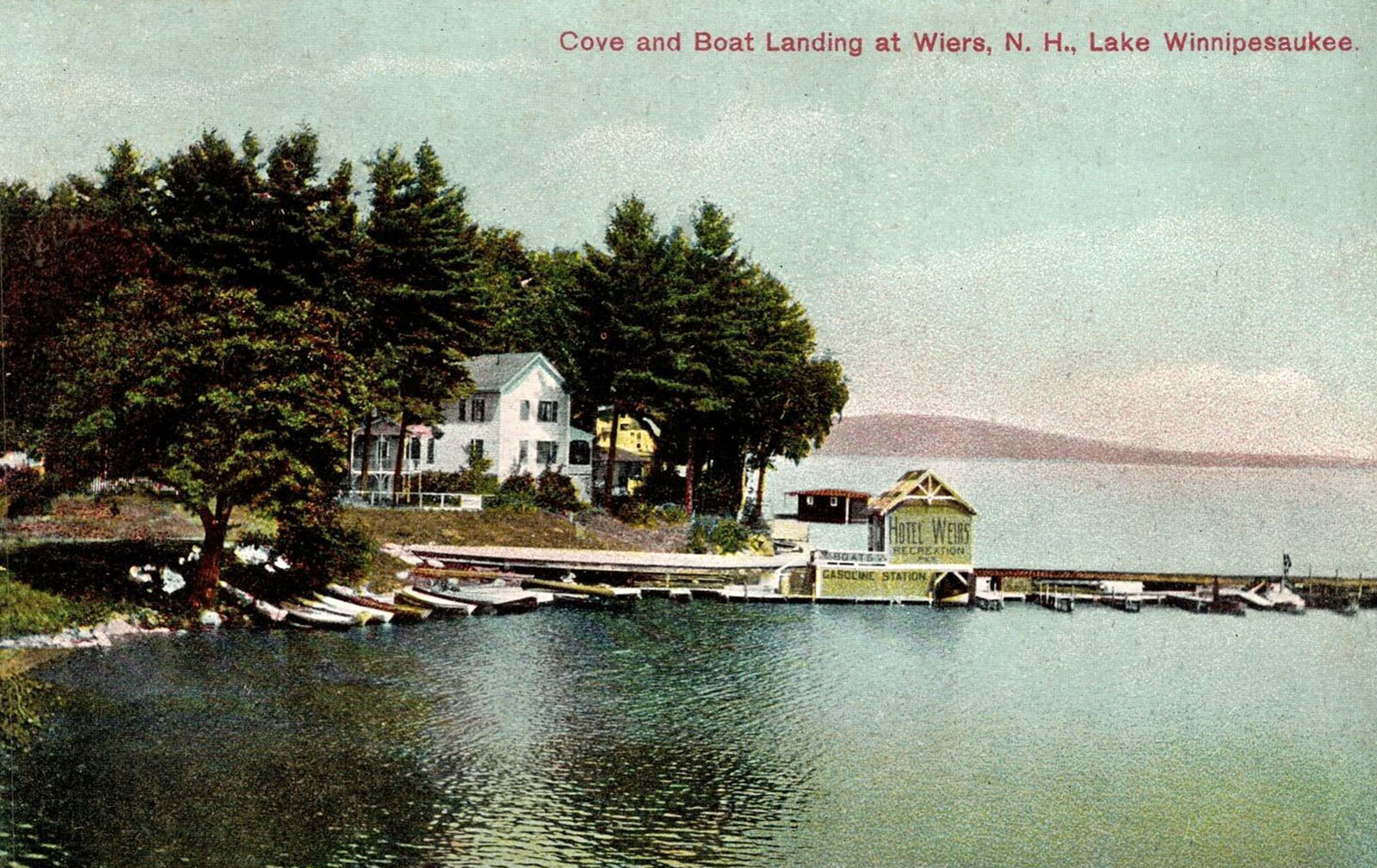
An early color postcard once again shows the building clearly marked as the “Hotel Weirs Recreation Pier”.

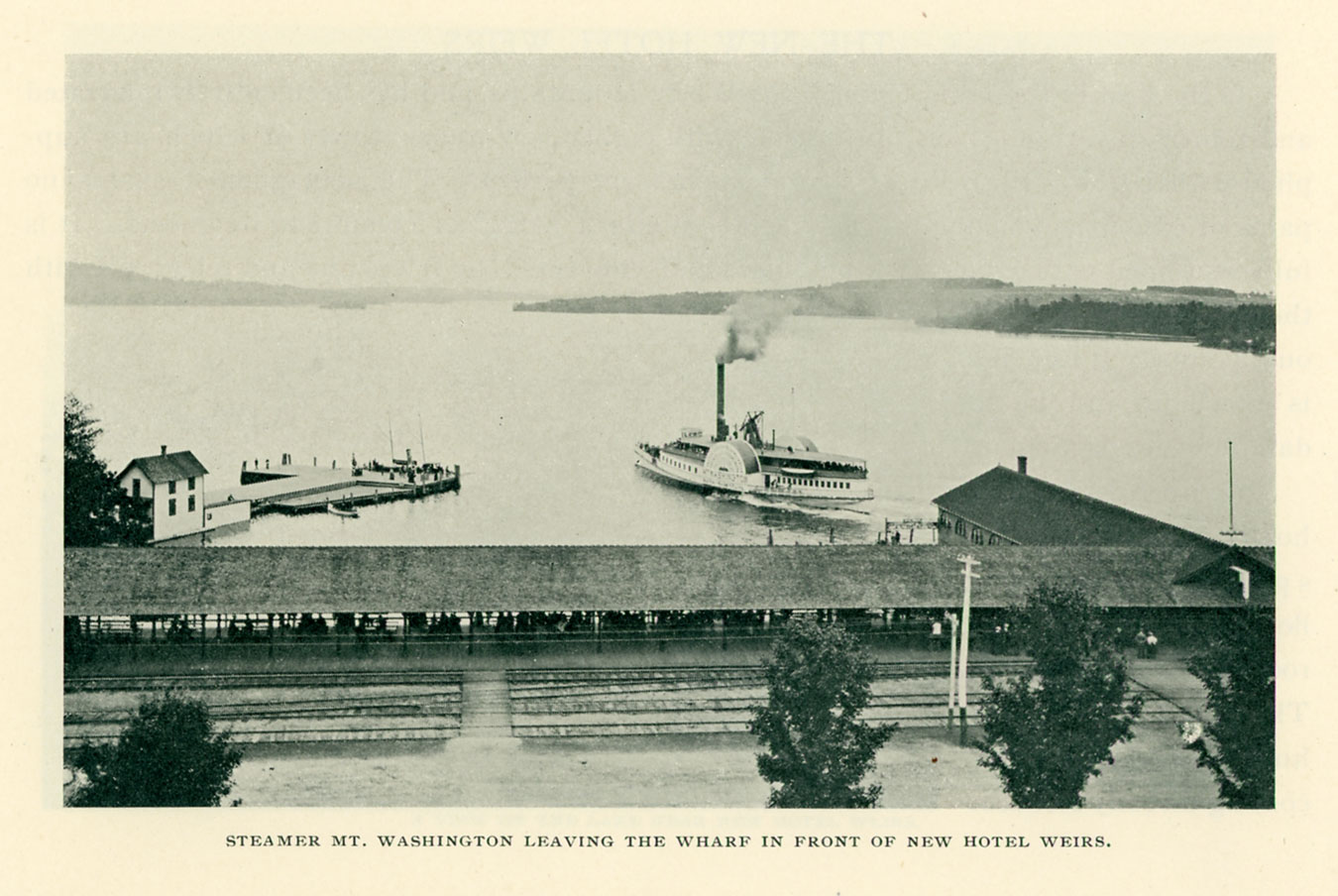
An early photo of the wharf shows the Mount out in the bay. There is a boathouse near the end of the wharf that is also seen in other photos on this webpage. At the very tip of the wharf is a small shack that seems to be floating on the water.
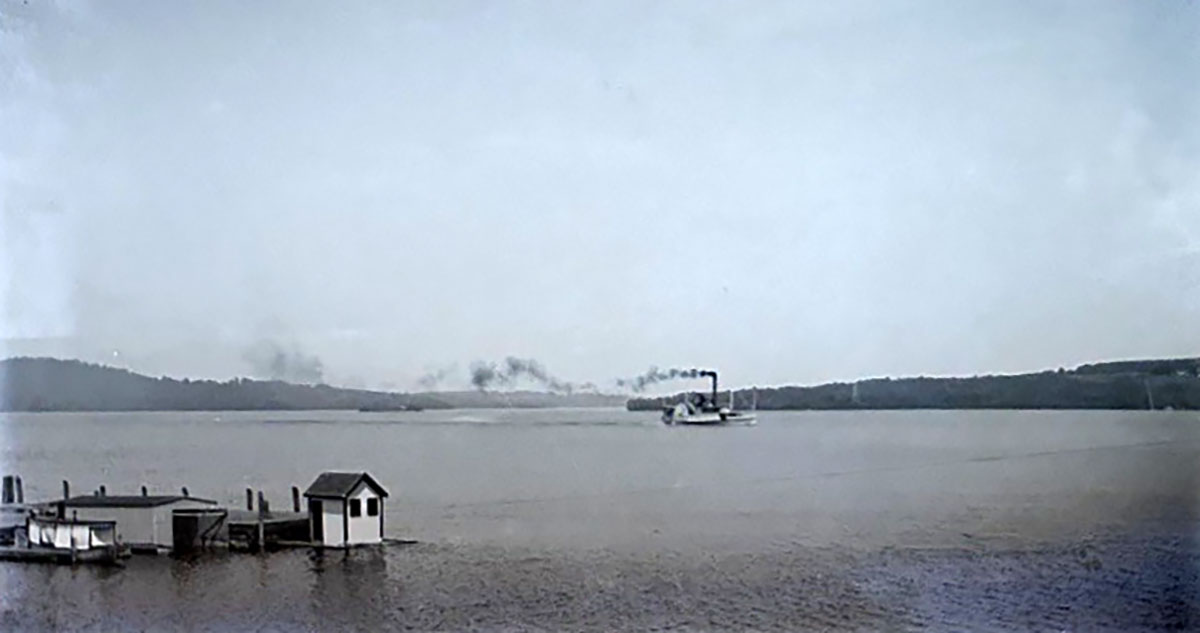
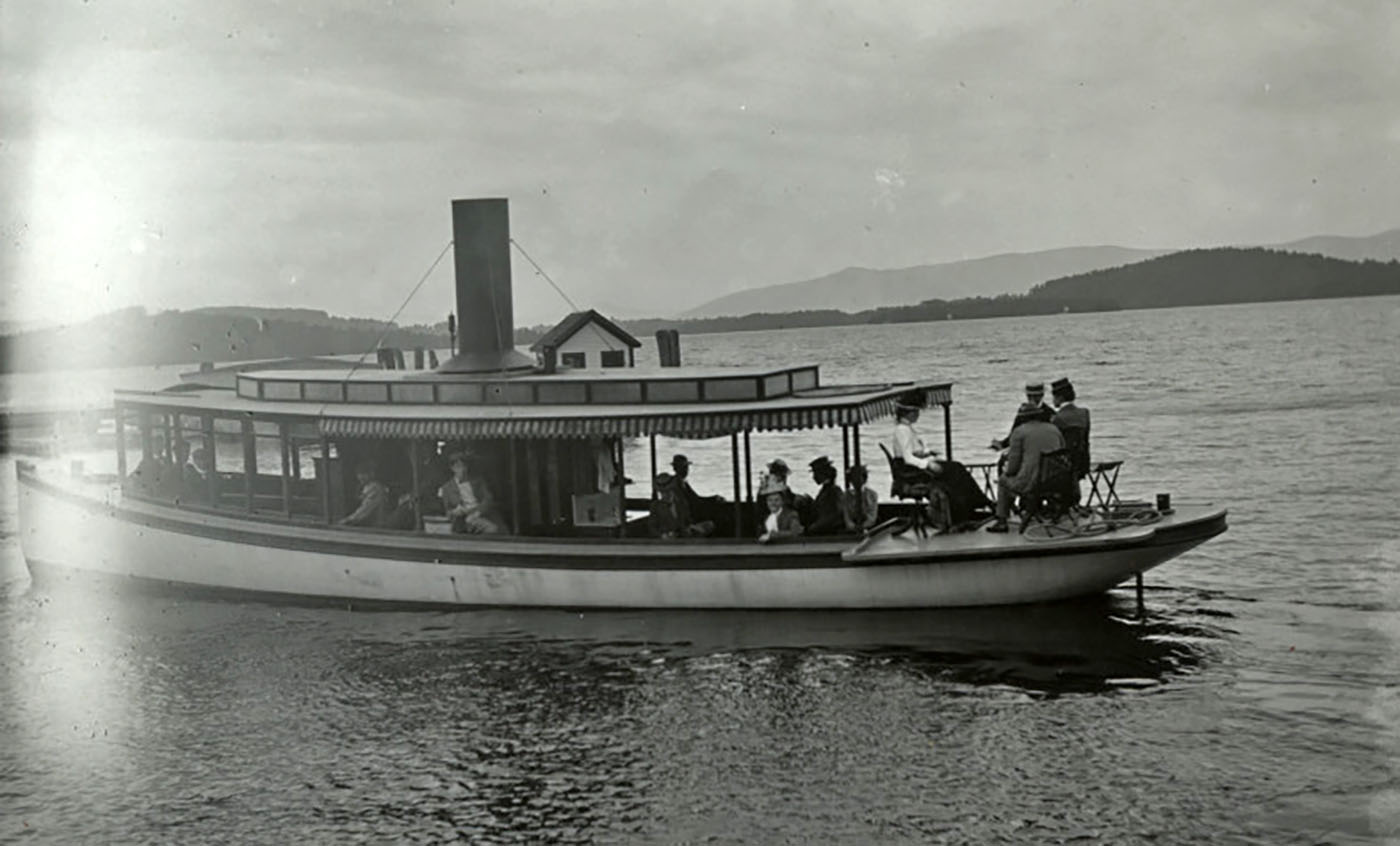
The steamer West Wind approaches the Hotel Weirs Wharf. The small shack is seen again.
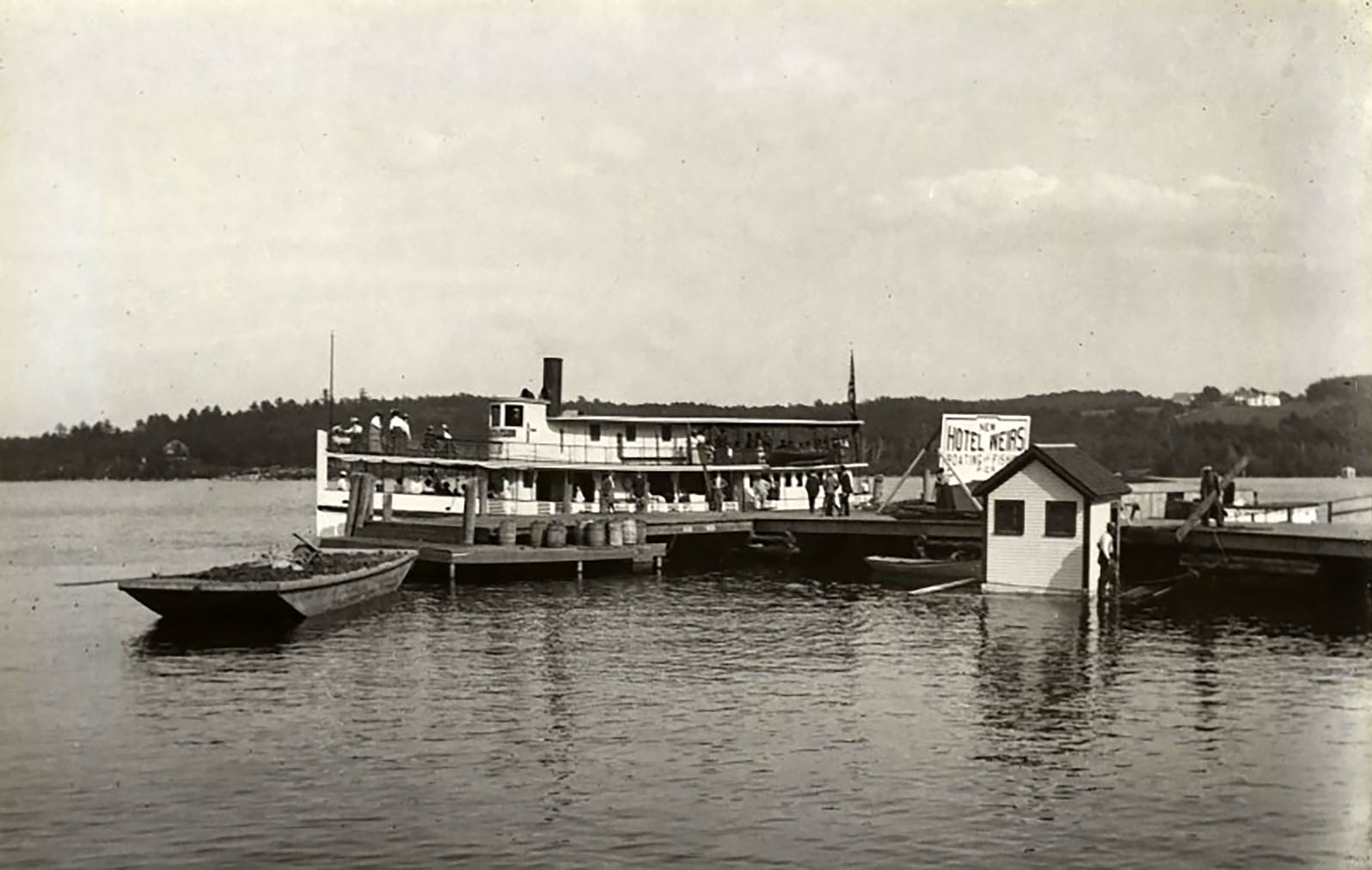
The small shack is seen once again, but this time on the other side of the wharf. A workman on the dock is handing a long board to a workman on the water next to the shack. A large sign is seen for the New Hotel Weirs. The steamship is the Maid of the Isles.
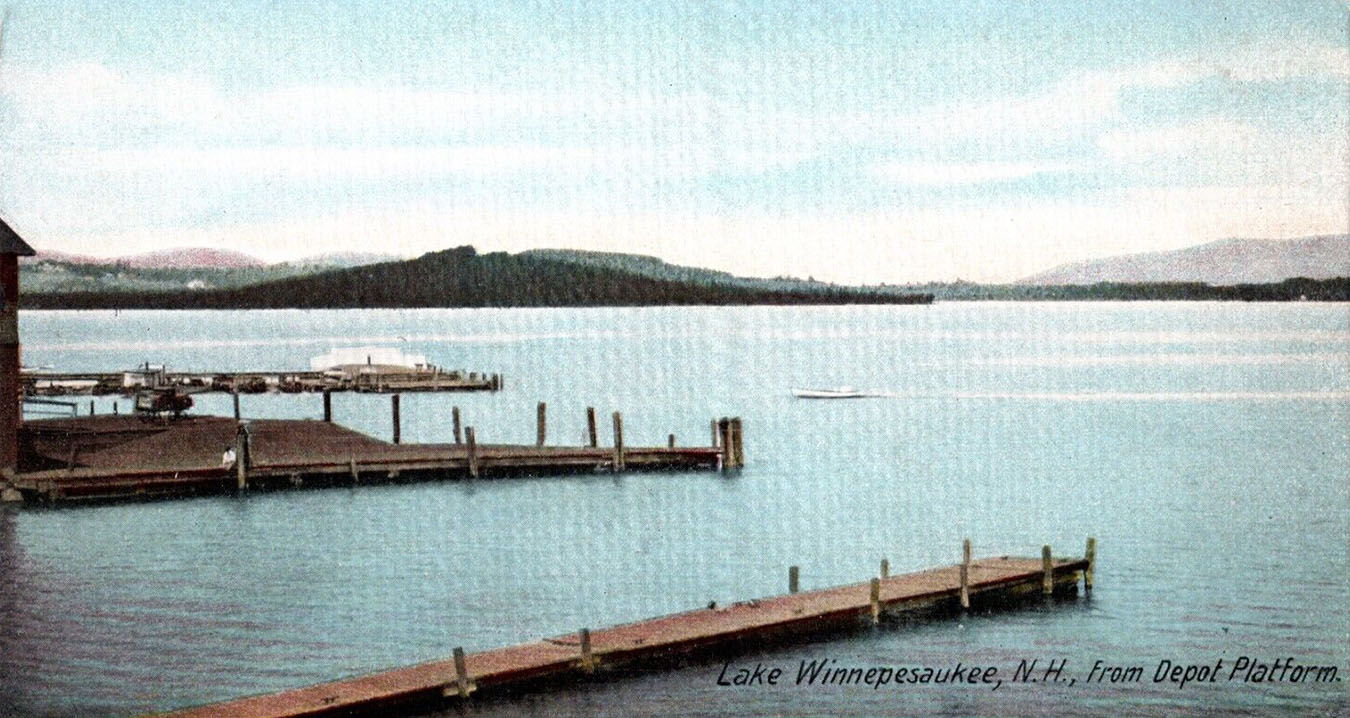
This postcard, entitled “Lake Winnepesaukee, N.H., from Depot Platform”, shows a private wharf in the foreground, the Mount Washington wharf in the middle, and the tip of the Hotel Weirs wharf in the background.
By the time of this photo (circa 1908) a second story had been added to the rental/ticket office on the wharf. In the background, from l to r, are the steamer Cyclone, the steamer Iris, and the yacht Swallow.

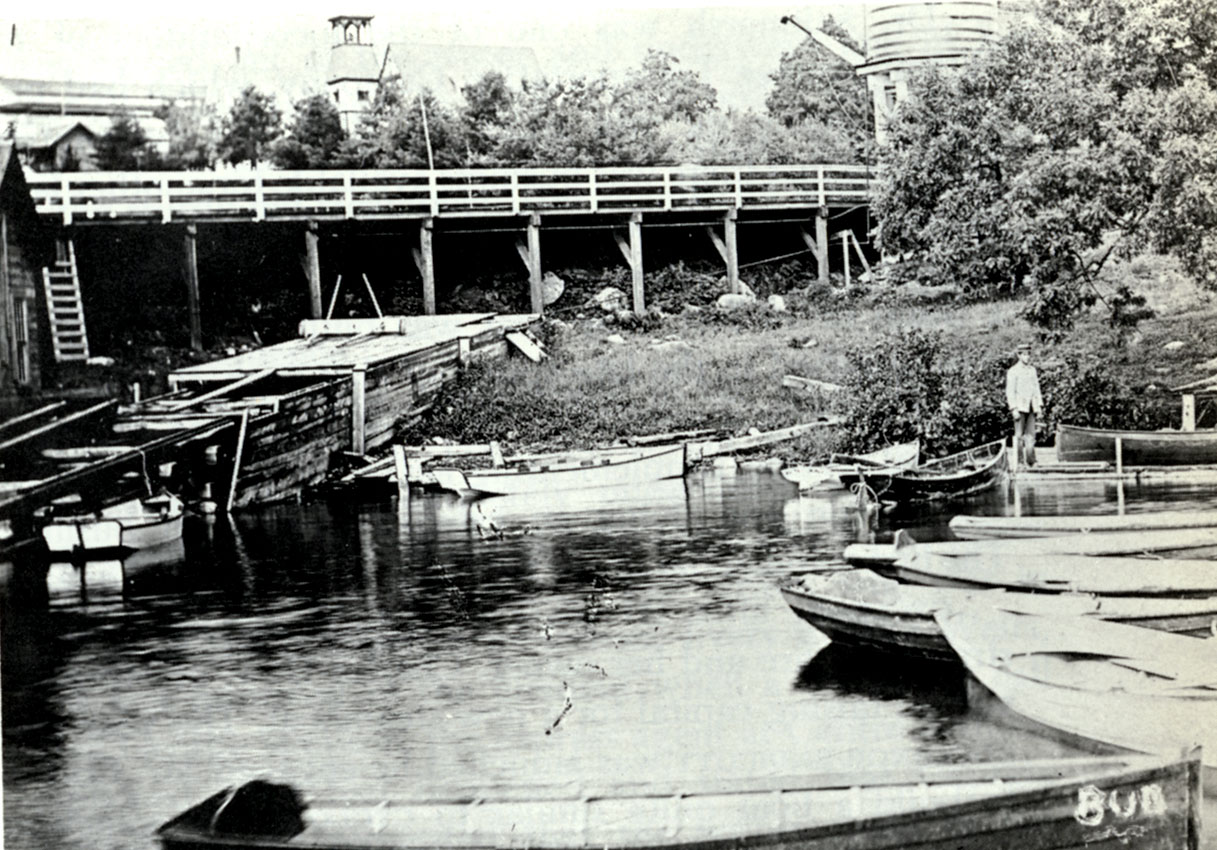
The photo below, dating between 1886 and 1892, shows not only the boats available for rent at the wharf (off the photo to the right), but also, on the left, the drydock for the Lady of the Lake steamer. Above the boardwalk railing can be seen, from l to r, part of the Hotel Weirs; the steeple of the original, 1886-1924 Methodist Church, and a water tower that served steam locomotives until standpipes were installed in 1893. Also in 1893 a long canopy was installed covering the entire boardwalk.
Water towers were typically located every five to twenty miles on a steam rail line to supply water for locomotive boilers. A heavy freight engine burning 100 lbs. of coal per mile used about 80 gallons of water per mile. The circular Weirs Beach water tank was 16′ in diameter and had a capacity of 21,000 gallons. The water for the Weirs Beach tank was pumped from the lake.
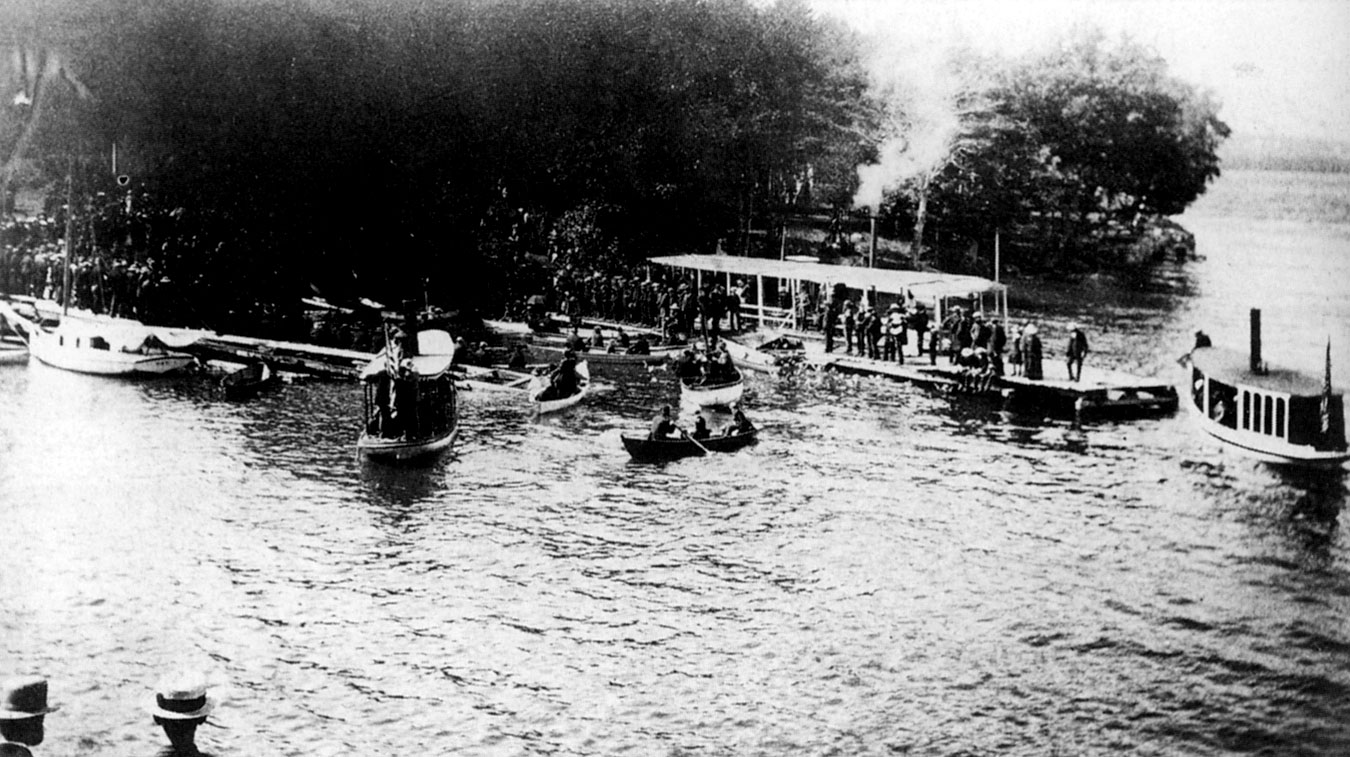
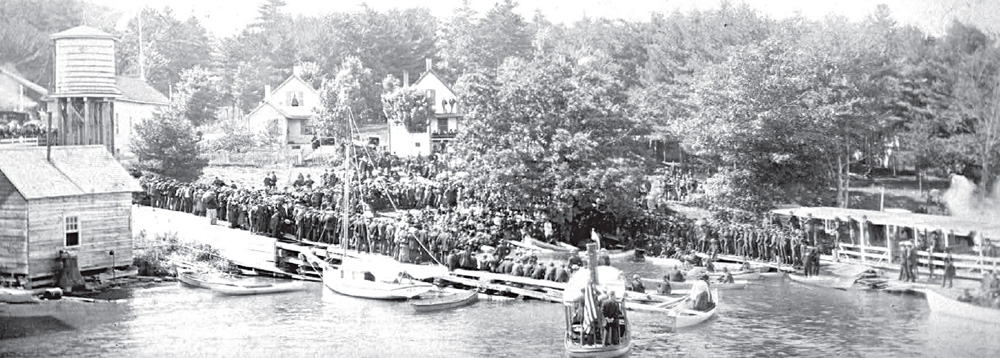
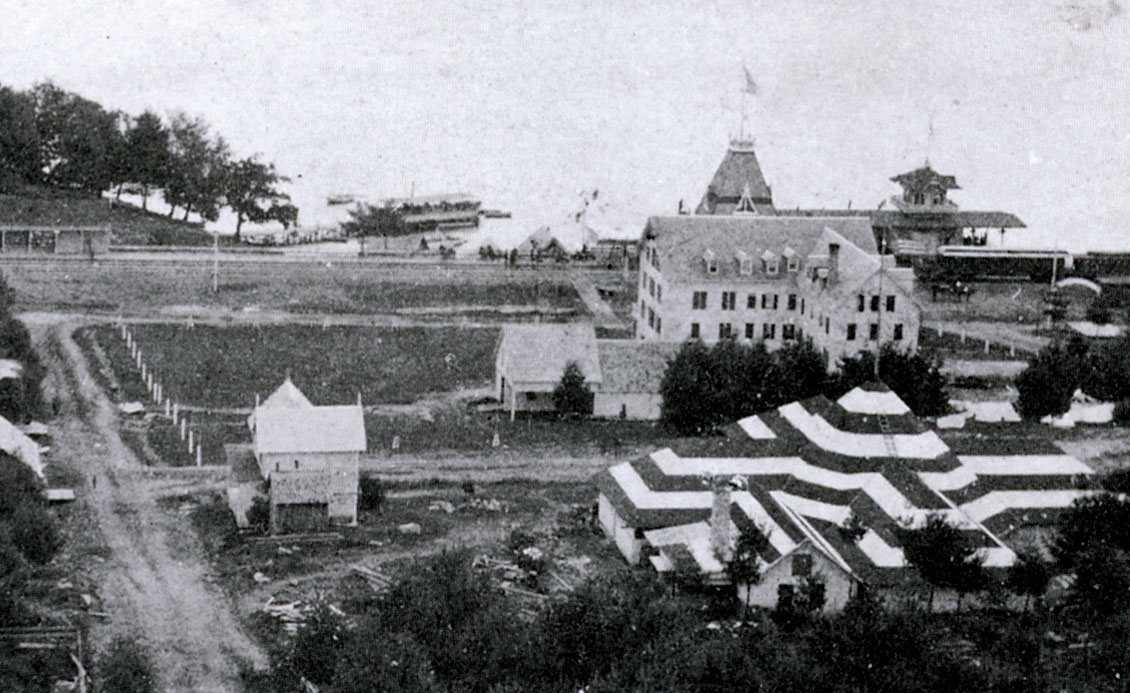
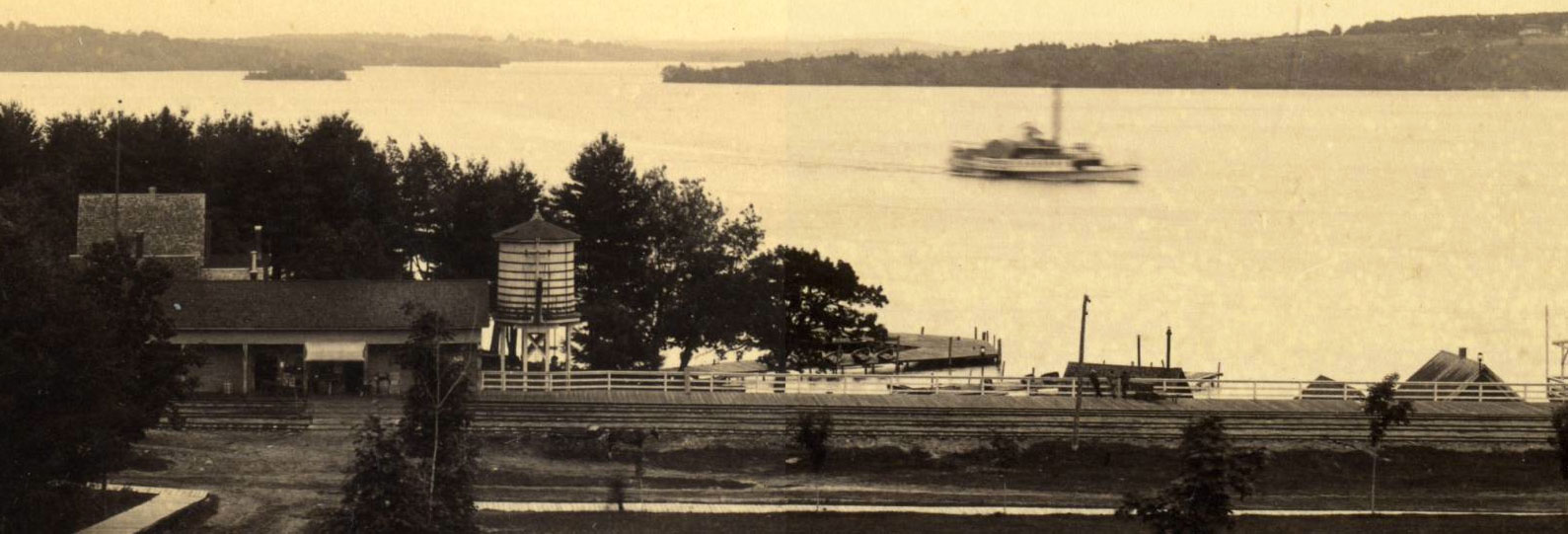
This long-distance photo of the wharf (left-center) is the earliest available. It was taken from the 1881-1885 “Orchard View” observatory at the top of Tower St. It seems to show a canopy covering the wharf. Also seen in the photo is the striped-roof Veterans Dining Pavillion, a rear view of the Hotel Weirs, and rail cars in front of the 1880-1892 railroad station. The wharf which extended down in front of the railroad station and serviced the Lady of the Lake steamer is hidden out of view.
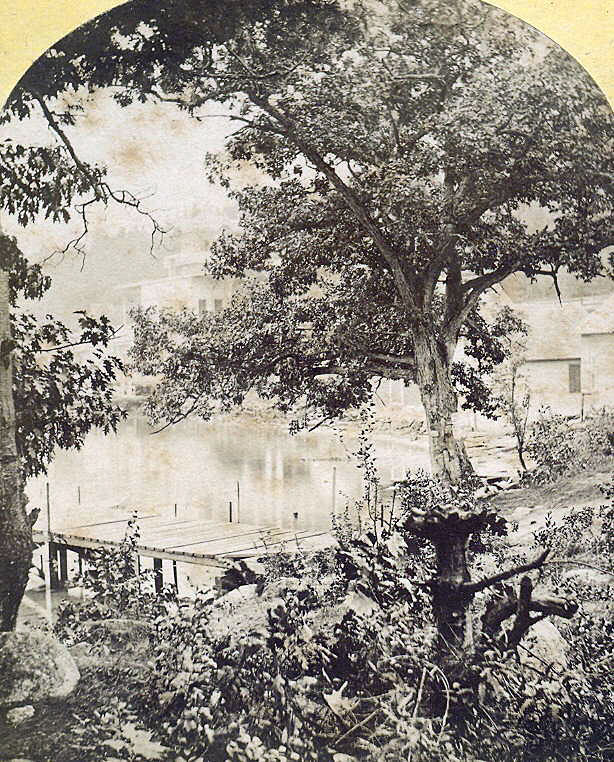
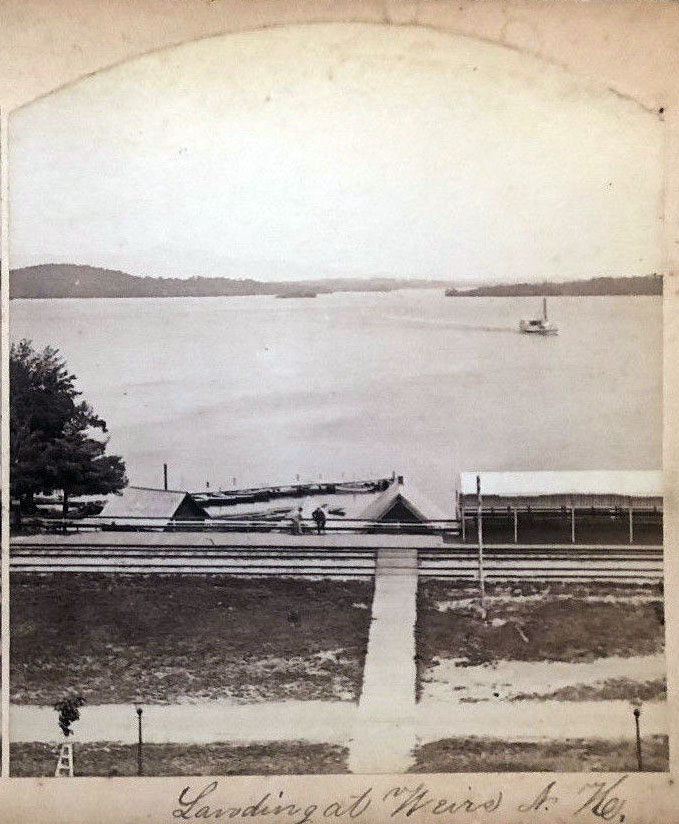

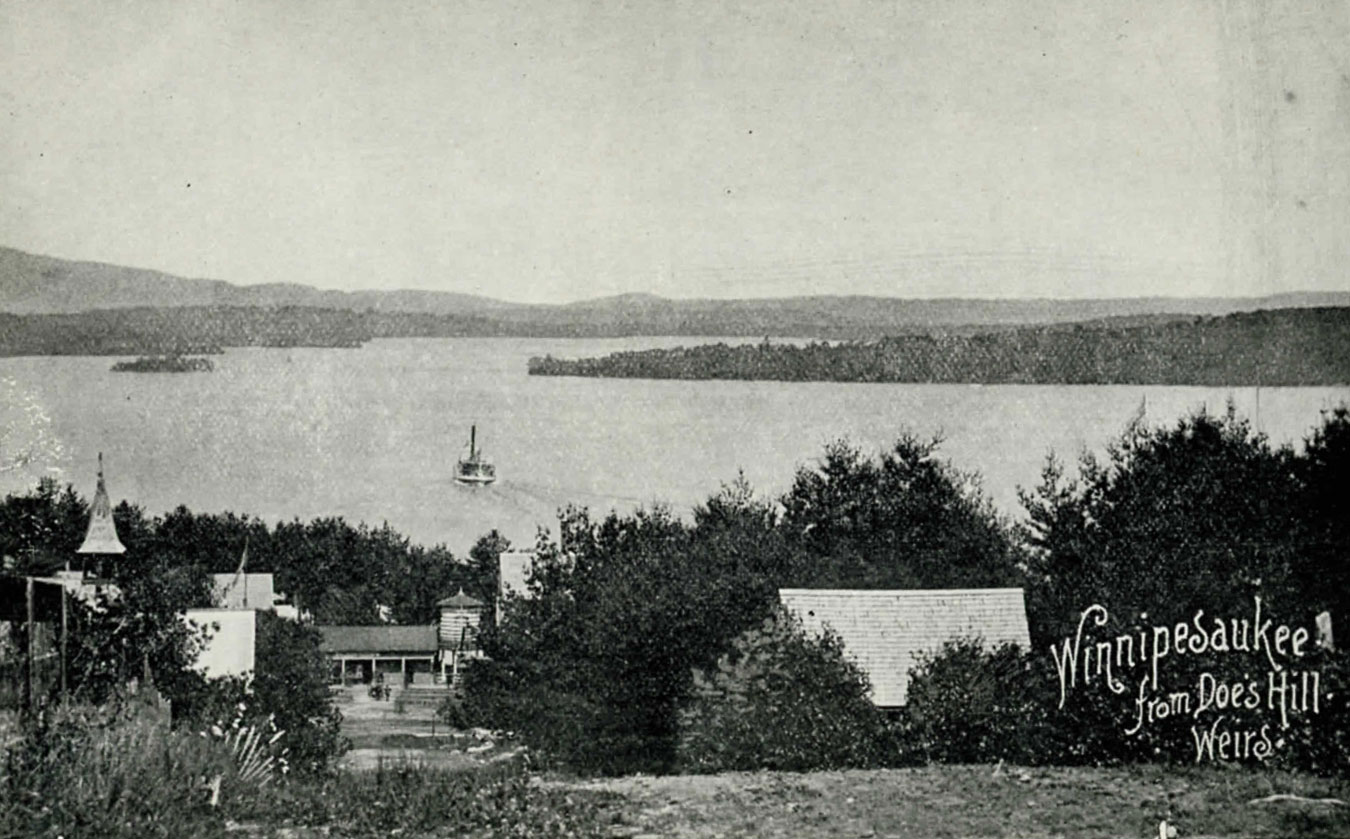
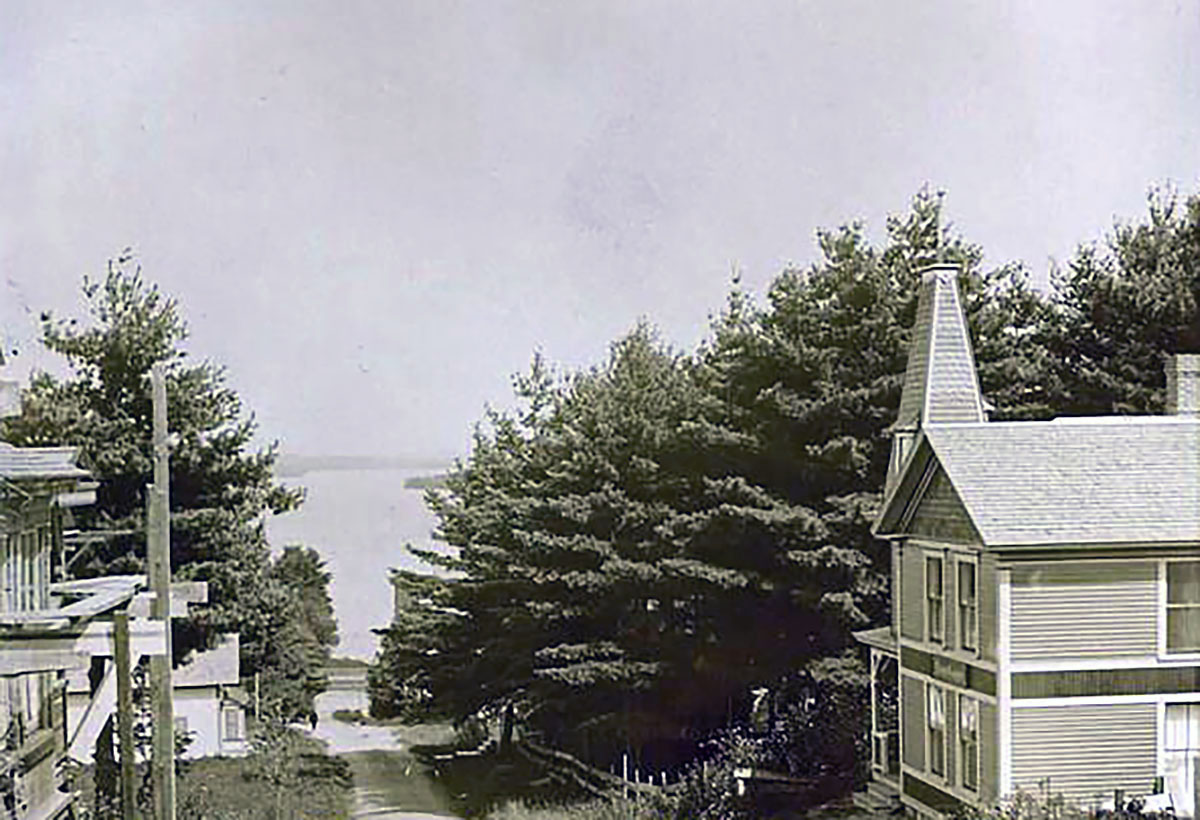
The view looking down Tower Street in the early 1900s. It is still a single-lane dirt road, not the two-lane paved road it is today.
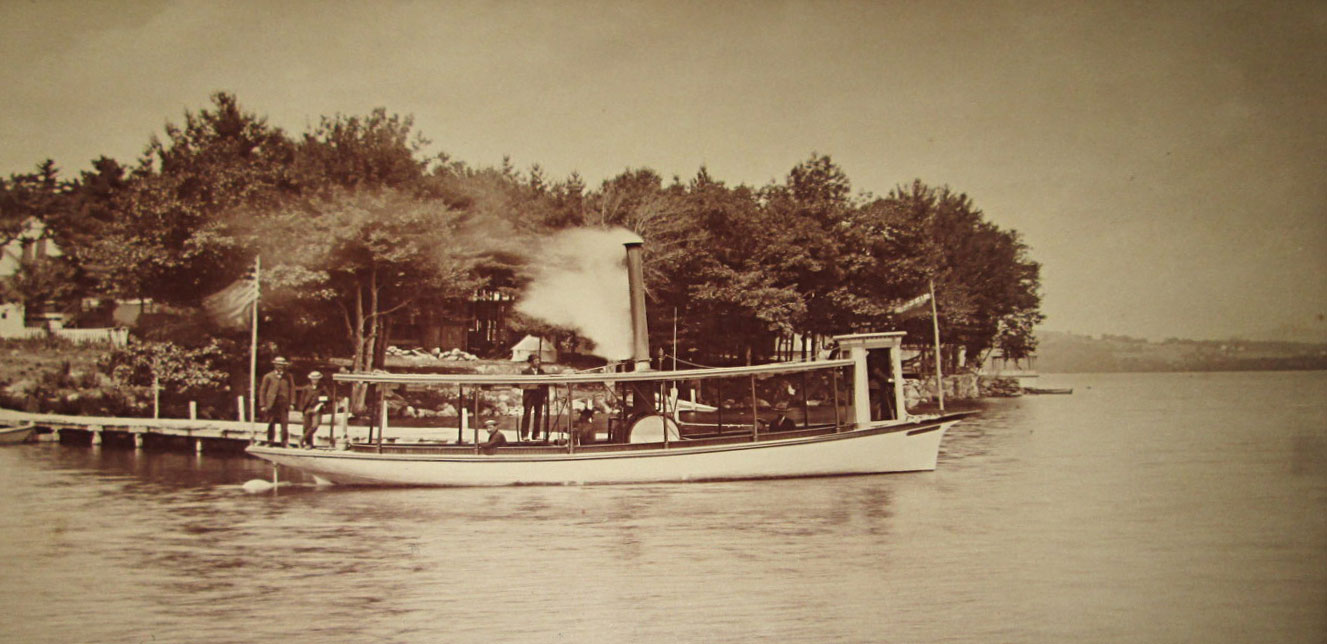
Here’s a very early photo of the wharf. In the background of the photo, one can see a tent pitched in a cleared area, in a part of the Methodist campground. The steamer is the Mineola. It was built by George H. Robie, Charles D. Robie, and Charles F. Brown in Newburgh, NY, then shipped to Lake Village (Lakeport) by rail, arriving on July 5, 1877. The steamer was 50′ long, with an 8 ½ foot beam, and seated 40 persons. Put into service on July 14, 1877, this was the first steamer on the lake to be driven by a screw propeller instead of side paddlewheels. Her low weight and efficient engine made her a speedy little steamboat, reaching 10 miles per hour, which was quite fast for the time, behind only the much larger paddlewheel steamers Lady of the Lake and the Mount Washington. On June 19, 1885, Herbert A. Blackstone bought a half share in the Mineola from Charles Brown, and docked her often at the Hotel Weirs Wharf, Blackstone’s main base of operations.